
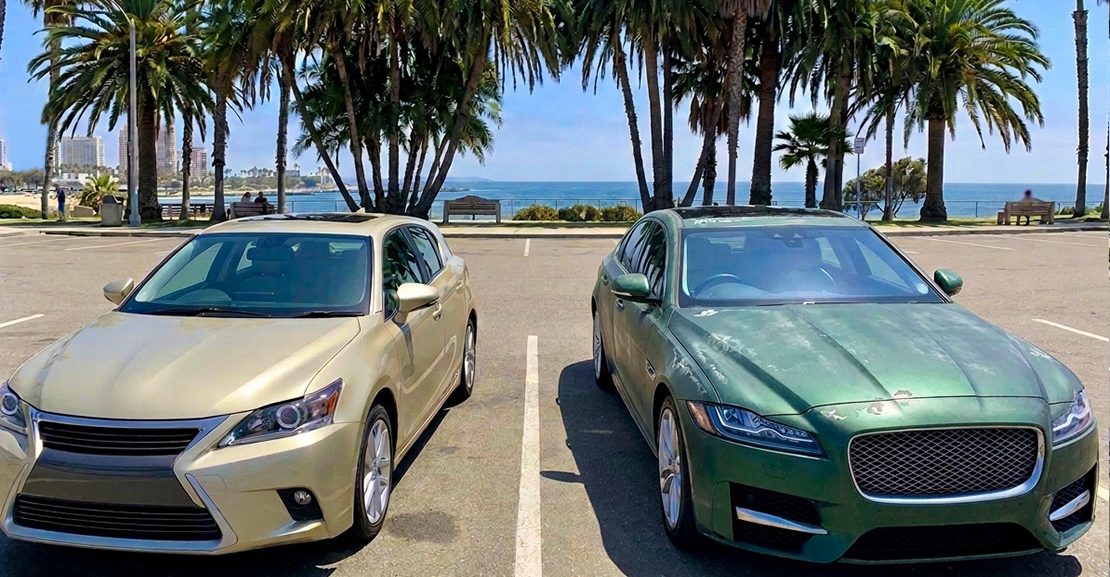
Coastal life in Orange County carries a hidden cost - one that starts wearing down paint as soon as you move near the shore. Paint that lasts a full decade inland in a city like Irvine can start to fail in half that time out in Huntington Beach or Newport Beach - and the reason isn't always obvious.
That gap starts to show up when a fresh paint job goes dull or chalky well ahead of schedule. Most homeowners who relocated from inland areas expect years of low-maintenance exteriors. Car owners usually figure their coat can hold up just fine out here. Salt air doesn't care about either assumption, though. The chloride particles that you can't even see drift inland off the Pacific, get into the paint surfaces and pull moisture along with them - every hour of every day, rain or no rain.
The damage builds gradually and invisibly - it's part of what makes it so frustrating. Paint can hold its appearance on the surface even as the wear underneath builds for quite a while. There's no single second where you see a dramatic change - it's a slow accumulation that can only become obvious once it's already well underway.
The difference between a scheduled maintenance visit and a more expensive repair bill usually depends on how early you started paying attention. Coastal residents who treat their paint the same way they would somewhere inland often end up dealing with damage that a different strategy could have prevented.
Let's get started with what salt air actually does to unprotected paint and what you can do about it before the damage gets ahead of you.
How Salt Air Breaks Down Your Paint
A home within a mile or two of the water (in places like Laguna Beach, Dana Point or Corona del Mar) puts the paint under a whole different strain than most inland homes will ever see. Salt in the air near the coast doesn't taper off slowly over time as you move inland - it drops off pretty fast. The air near a home in Anaheim or Irvine is nothing like what you get in a beachfront neighborhood. That extra mileage from the water matters.
A home just a few blocks from the water in Dana Point gets hit with far more airborne salt than one sitting a few miles inland - and the difference between those two locations is far greater than it ever looks on a map. Salt air drifts through entire neighborhoods all day long. It settles onto every surface it can reach and starts working against your paint well before you'd ever see anything wrong. By the time the paint starts to look bad, a fair amount of damage has likely already been done beneath the surface.
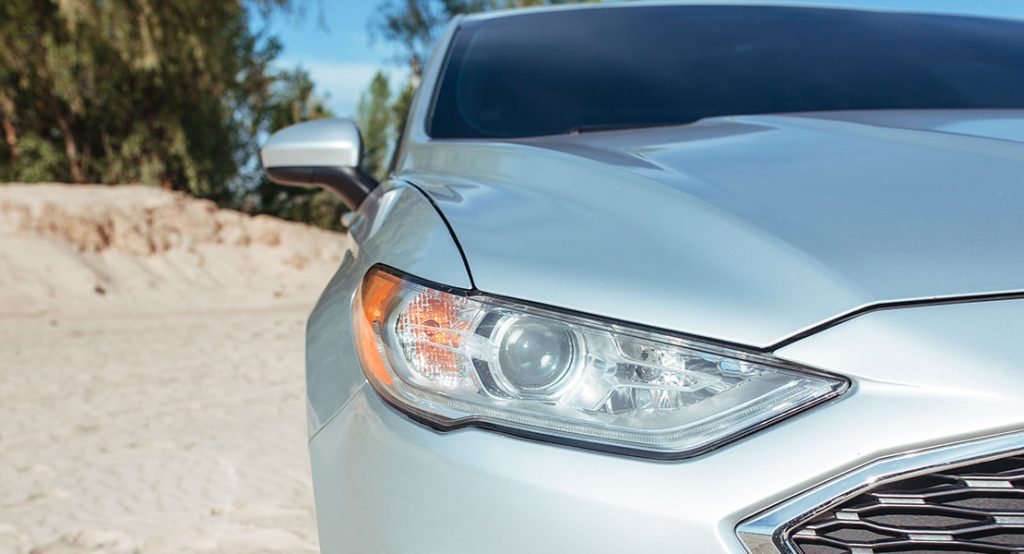
If exterior work is on your radar (or your paint is already starting to look like it's losing the battle), this part is worth reading closely. Salt doesn't need that long to start doing damage - and once it gets a grip, the whole deterioration process moves fast. The next section goes into what's actually happening at a chemical level when salt air meets a painted surface - and it helps explain why some products and prep methods can last far longer than others in coastal conditions.
The Marine Layer Leaves Salt on Your Car
It also brings in the salt moisture along with it, which means your car, your siding, your trim and almost everything outside stays damp well into the afternoon. Even on days that feel mild and comfortable, the moisture is still quietly at work.
The problem with fog is how long it stays. Fog is just - there. And all that salt-laden moisture ends up sitting directly against whatever surface it landed on, sometimes for hours at a time. The paint never quite gets a full chance to dry out between exposures the way it would in a drier part of the country.
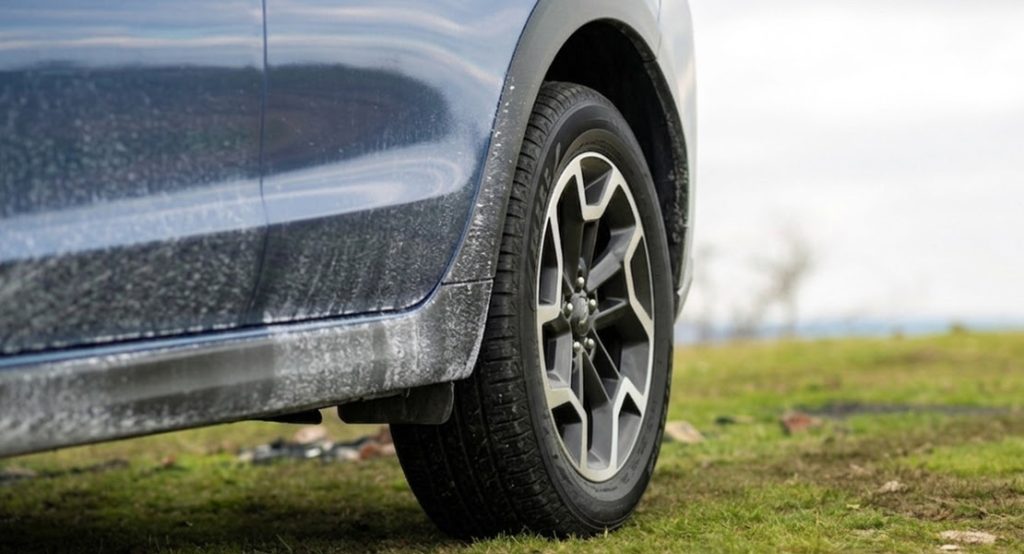
For those a bit farther inland (Anaheim Hills, Yorba Linda, places like that), the whole situation changes pretty dramatically. The marine layer burns off well before it ever makes it that far, which means those damp mornings and sluggish drying times that coastal neighborhoods go through just aren't a concern out there.
Coastal residents in places like Newport Beach, Dana Point or Laguna Beach are up against something that their inland neighbors aren't. Every morning, the marine layer leaves behind a stretch where salt moisture just sits. On your hood, your doors, your window trim, your paint - it all just stays there. It's the relentless repetition that does the real damage. Week after week and month after month, that exposure works its way into the unprotected paint in ways that a quick rainstorm never could. Rain rinses off and moves on. Fog just stays.
Location plays a huge role in this. Even a slight difference in distance from the coast (just a few miles) can change what your paint has to go through on any given day.
Cars by the Shore Fade the Fastest
Any car parked outside near the coast picks up salt residue every night - it settles on the hood, the roof and the trunk lid and then just sits there until it gets washed off. The same salt settles on your home's exterior walls, trim, fascia and every other painted surface facing the open air. For plenty of drivers and homeowners, that residue doesn't get dealt with nearly as often as it should.
The clear coat on your vehicle is the first layer to take damage. It's thin, and it breaks down much faster when salt residue sits on it night after night. Once that layer starts to fail, the paint underneath has almost nothing left between it and the sun, the wind, the rain and everything else it's exposed to. From there, the oxidation moves in. The paint starts to look chalky or faded - the kind of damage that won't fix itself without some pretty heavy correction work.
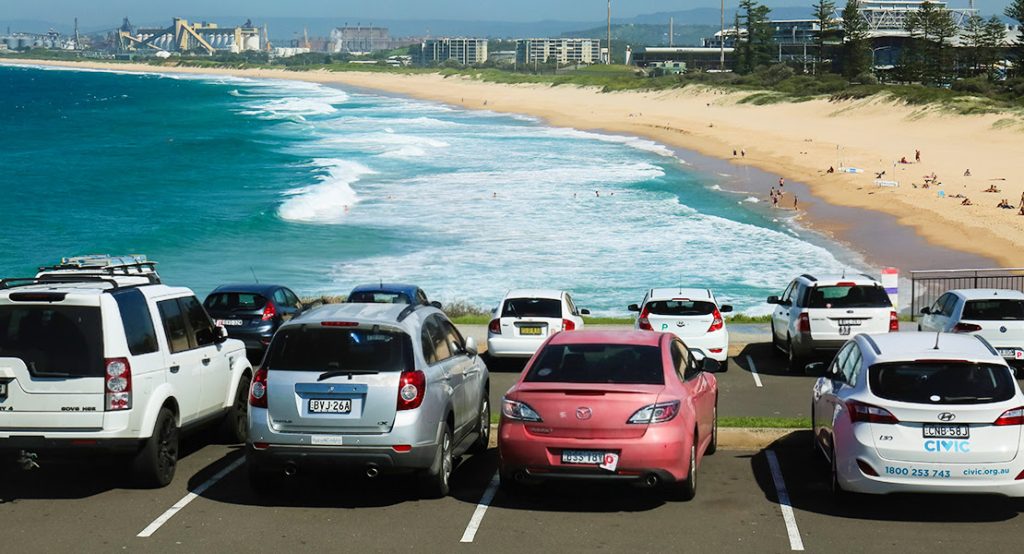
The same process plays out on the exterior of your home, just on a longer timeline. A fresh coat of exterior paint can last anywhere from 7 to 10 years if you're inland - near the coast, that same paint job might only get 3 to 5 years before it starts to deteriorate. For most homeowners, that gap hits pretty hard once they sit down and do the math on what exterior paint costs.
Coastal air carries a steady load of salt particles, and those particles settle on every surface - your car, your house, your fence, your garage door. On a vehicle, the residue is nearly invisible. Nothing on the surface will tell you that anything has landed on it. The salt is already on the paint and has been quietly causing damage the whole time. On a home, the signs show up later - the paint bubbles, peels and the color starts fading well ahead of schedule. The quality of the work wasn't the issue. It's purely a matter of where the house sits.
Ask yourself how often you actually rinse your car between washes - not a full wash, but just a quick rinse to knock the residue off. For most drivers, the honest answer is not very often, and it's understandable. Now ask how often you inspect your home's exterior paint for early signs of salt damage. Most people don't think about it until the peeling is already visible.
Run the numbers on your car - count the nights between washes and multiply that by how many hours of salt exposure the paint takes on each time. The numbers add up fast. Then run the numbers on your home - a house that was freshly painted just 3 years ago shouldn't be due for another round already. But in a place like Corona del Mar, that's the schedule homeowners find themselves on. Most eventually have to budget for a paint cycle one way or another. You paint the house, wait a few years and do it all over again.
Cars and homes near the water or in areas that get a heavy marine layer at night are going to experience this damage faster than those parked or built even a few miles inland. Without the right coatings and some surface prep from the start, salt air will break down the finish every time - on your vehicle and on your home. The upside is that protective products and application methods built for coastal conditions are available, and the right ones make a real difference in how long your paint actually lasts.
How to Spot Salt Damage Early
Salt damage almost never starts with rust or peeling paint - that part comes much later. The first sign is usually a surface that just looks a little flat or dull, sometimes right after a fresh wash.
One of the first signs to look for is a chalky texture on your paint. Run your hand along a panel - a healthy finish should feel smooth and even - and if it feels powdery or rough anywhere, it's probably started to break down. Fine hairline cracks across the surface are worth watching too - they're fairly easy to write off as just some dirt or a light scratch.
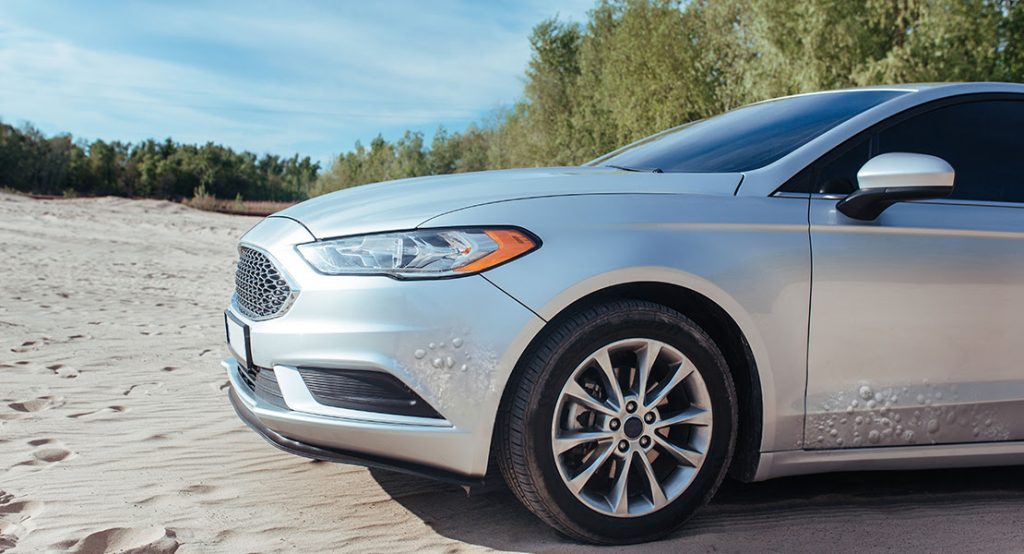
Small bubbles are a warning sign - those little raised bumps form when salt and moisture creep under the paint and start pushing it up from below. White residue along the trim edges or door seams deserves a close look as well - that's dried salt - and if it's built up like that, it's usually been sitting there quite a bit longer than it seems. None of these signs are all that dramatic, which is why they're easy enough to miss during a busy week - or just put off because the car still looks mostly fine from a few feet away.
Take a bit to have a look for yourself - walk around your car or find an exterior wall that faces the coast and get close enough to actually run your hand along the surface. A quick visual scan won't cut it.
Films and Coats That Block Salt Air
Once damage sets in, the conversation moves from protection to repair - and repair is always going to cost more. A little prevention matters, which is why it's worth looking at the main options before we get to that point.
Ceramic coatings are one of the strongest defenses out there against salt air. A ceramic coating bonds directly to the paint itself and forms a semi-permanent layer that actively resists moisture and corrosion. The cost up front does run a bit higher than most other options (it's a fair tradeoff), but a quality ceramic coating can hold up for a few years with very little maintenance needed along the way.
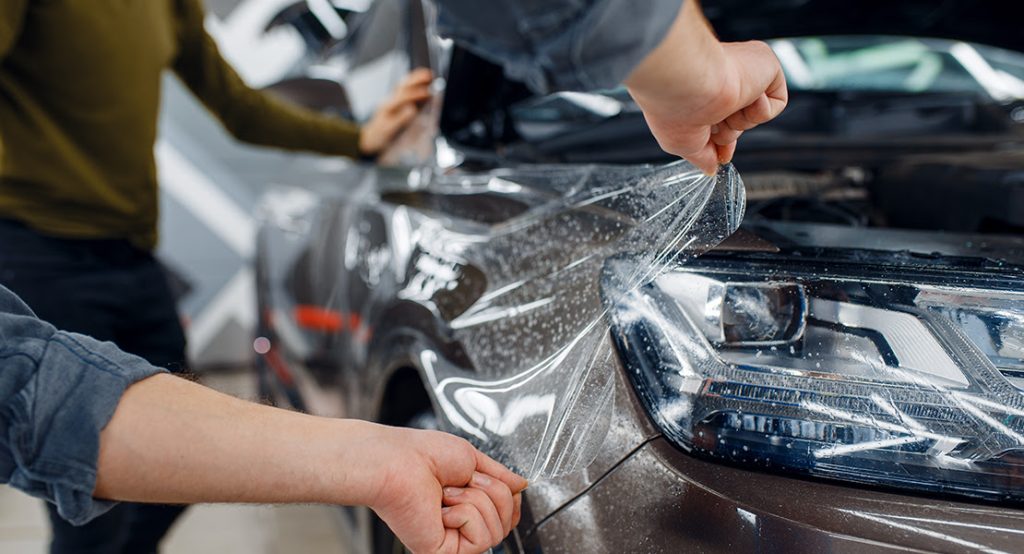
Paint protection film works a bit differently. It's a physical layer - a film that sits directly on top of your paint and absorbs whatever comes at it, so the paint underneath never has to take any of that damage. It does especially well on the parts of your car that see the most exposure (the hood, front bumper and mirrors) where salt air and road debris usually cause the most wear.
For anyone who's not quite ready to go with either option, wax is a decent starting point that won't cost you much. The main tradeoff is the maintenance - you'll need to reapply it every two to three months or so to hold any level of protection. Salt air is especially hard on wax and wears through it fast, so a missed cycle means the paint is left exposed until you can get back to it. It's not a low-maintenance option.
Transform Your View with Professional Tinting
Coastal life in Orange County is wonderful - and those who live here would never trade it for anything. What comes with the territory is salt air that tends to cause a fair amount of quiet damage before anyone sees it's even there. Salt air is invisible, and that makes it pretty easy to set aside and deal with later.
The marine layer, the salt in the air and the residue that quietly accumulates night after night - it all builds up fast.

If your car or your home is due for some attention, OC Tint Shop is a great place to start. We've worked with thousands of clients all across Orange County (Dana Point to Anaheim), and we've seen firsthand what the right protection can do for a vehicle or a home in a coastal climate. Our team covers automotive window tinting, paint protection film, ceramic coatings and residential window film - and we're always happy to work out what actually makes sense for your situation.
Give us a call to set up a free consultation and find out how we can help.