
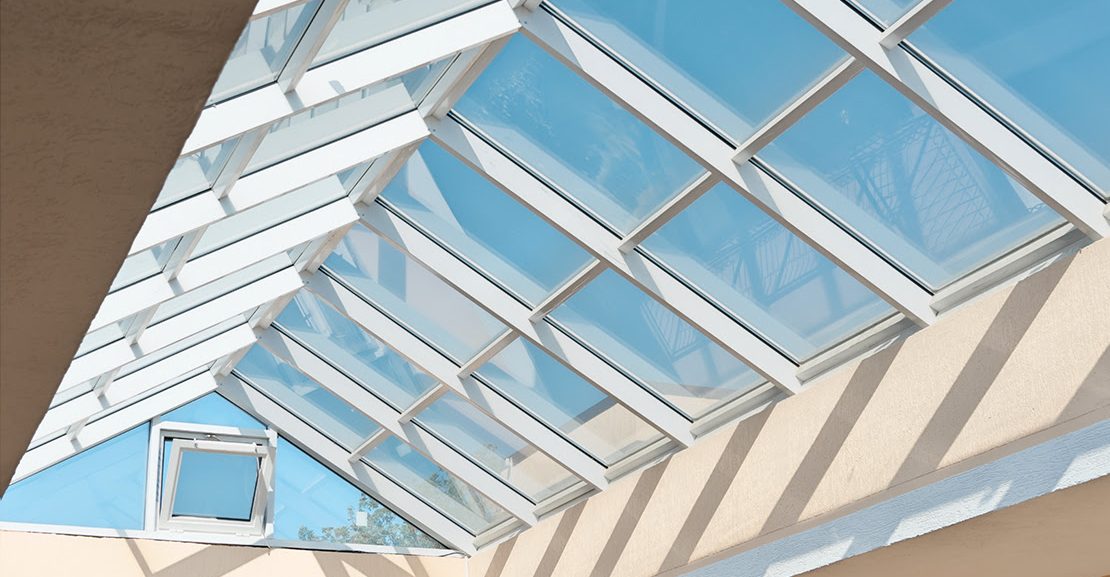
A skylight is a whole different project from a standard window as far as window film goes. Most property owners go into it with a fair amount of confidence, only to run into a wall of technical ratings, product claims that contradict each other and California building codes that don't give you much to work with. Get the wrong film, and you could land right back in a hot room - or worse, with a beautiful skylight that barely lets any light through anymore.
This matters quite a bit. Get the right film and your energy bills will drop, your furniture and flooring will hold their color for years longer, and the room will stay comfortable regardless of the season. The right film also matters in how warm a space feels during the colder months.
California's climate is pretty hard on skylights, and when the state's building codes also come into play, the list of products that are actually worth looking at gets pretty short. A film that performs well in other states isn't automatically going to work here - either the conditions, the laws or sometimes the two together will get in the way. That gap in performance tends to show up in the first summer, when a film that looked great on paper just doesn't hold up. The product that you walk away with will have an effect on your day-to-day comfort and your energy bills over time, so it's worth taking a close look at what's available before you settle on anything.
Let's find the right window film for your California skylights.
Why Your Skylight Needs Window Film
California gets sun - great for beach days, but not so great for your home. Of the places where that nonstop exposure adds up, skylights are hit the hardest.
A skylight is positioned almost directly in the sun's path for most of the day. The angle of the glass means sunlight hits it nearly head-on instead of at a slant - so a much bigger amount of solar energy ends up passing straight through into your living space. During a heat wave, that overhead exposure can make an open room feel extremely warm.
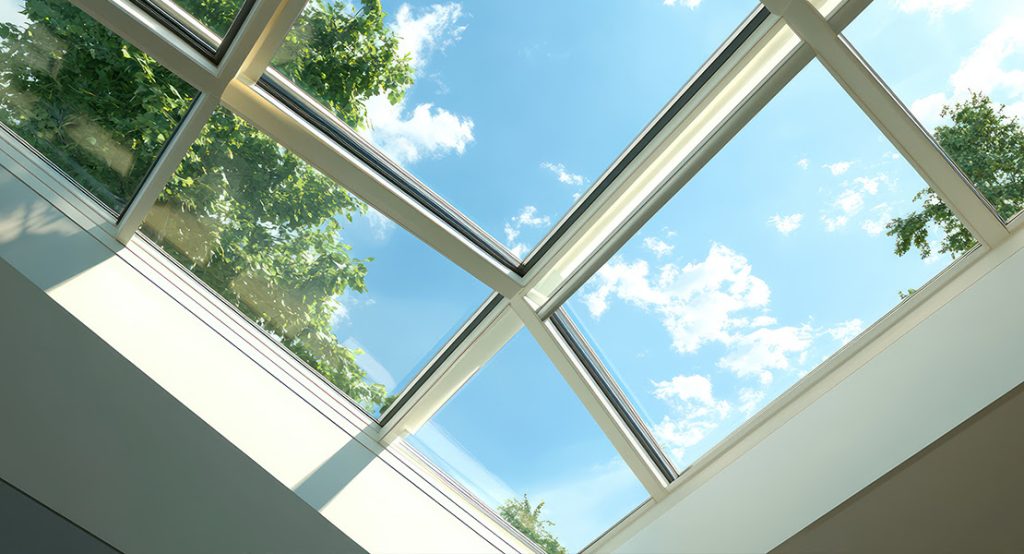
Most homeowners love their skylights at least in the beginning. The natural light that comes through them feels warm and inviting and has a way of making a room feel noticeably bigger - without any renovation work at all. For the money, it's one of the better changes that you can make to how a space feels. A cooling system that has to fight off the heat coming through the roof or windows will work harder and harder - and that means higher electricity bills. California summers run long, so the extra strain just builds up month after month. Window film is specifically made to help with that and does it without taking away any of the natural light that made those windows worth having.
Keep this in mind when you shop for film. What works fine on a standard window isn't necessarily going to work on a skylight, and the reasons actually do connect back to everything we've talked about here - the angle, the intensity and just how much direct sun your skylight is exposed to throughout the day. Plenty of homeowners will grab whatever film they used on their living room windows and think it'll carry over just fine - and from what I've seen, that's usually where the problems start.
What a TSER Rating Tells You
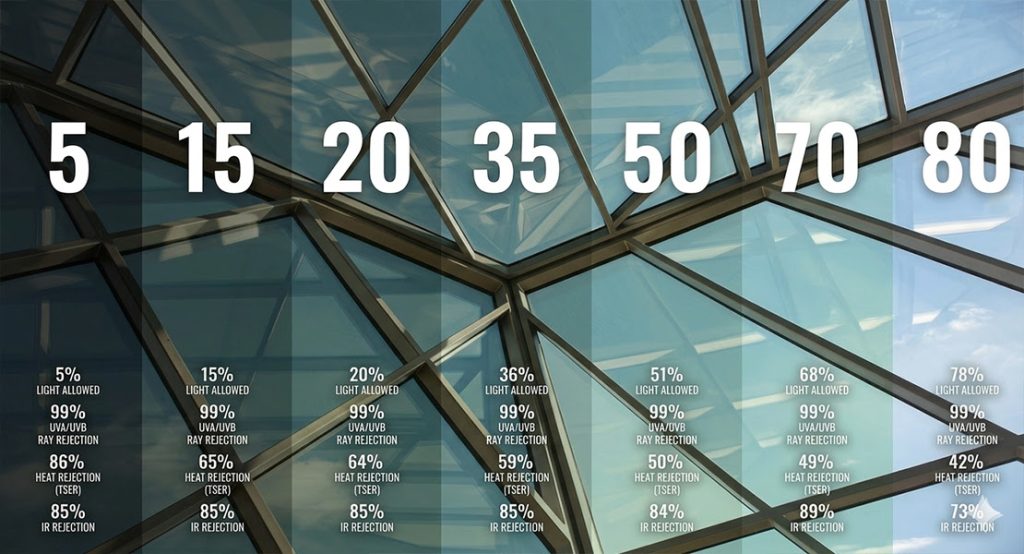
At some point in your search for skylight film, you're going to come across a number called TSER - Total Solar Energy Rejected. It's the percentage of the sun's total energy that a film is rated to block. With a higher TSER rating, less heat passes through your skylight and into your living space, which makes it one of the more helpful numbers to look at as you compare your options.
For most California homes, a TSER rating of anywhere from 50% to 80% is a target range. A film rated below 50% just won't hold up against the intensity of the sun that California gets - it's not going to help. At the other end of the scale, anything rated above 80% starts to cut out more natural light than you'd want, and your room can seem a little dim and closed off.
Air conditioning is one of the single biggest drivers of a household's monthly energy bill in California, and a chunk of that heat comes in straight through the skylights. A window film with a strong TSER rating can lower that number by a noticeable amount - it's something to keep in mind as you work through your options.
On any product spec sheet, the TSER number is the first detail that's worth your attention - everything else on the page can wait. What matters is that the film rejects enough solar energy to help in your part of the state. California covers very different climate zones, and a coastal home in San Diego has pretty different needs than a home that's inland in Sacramento or the Inland Empire. The TSER rating gives you a reliable and easy way to compare your options without any background in materials science.
Get Natural Light Without the Heat
Visible Light Transmission (or VLT) is the rating that tells you how much natural light a window film will let through. A film with a 70% VLT rating lets in most of the available daylight, and a film at 20% holds back a fair amount of it.
With skylights, this number carries more weight than it would with a normal window. A skylight is there for one reason (to pull natural light into a room), so a film that darkens the space too aggressively works against itself. The whole point is to get the heat under control without losing the daylight that made the skylight worth having.
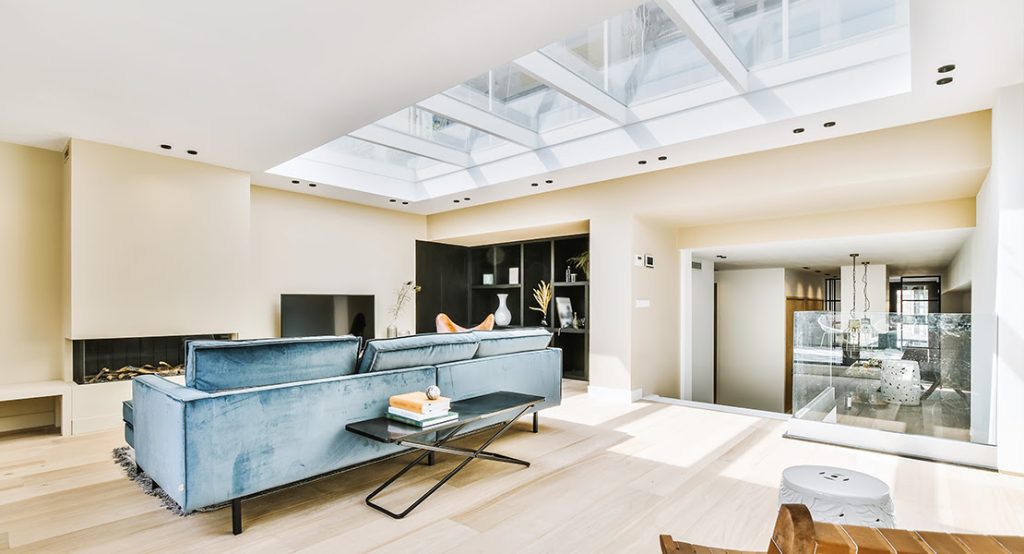
With a spectrally selective film, you don't have to choose between heat reduction and natural light. These films block the infrared heat and leave visible light mostly alone, and they do it by targeting the particular wavelengths of solar energy instead of cutting out everything all at once. Neutral-toned films can achieve something very similar without adding any heavy tint to your glass.
Take a close look at how the manufacturer describes the balance between heat gain and light transmission for a film. A low solar heat gain coefficient paired with a high VLT rating is usually what you're after for skylights. Quite a few of the darker films that get marketed as "solar control" products are actually a better fit for vertical windows. Put that same film on a skylight, and the room can start to feel oddly dim and closed - in a way that a side window just never would. The overhead angle does make the light loss quite a bit worse, and it's usually not obvious until the film is already on the glass.
Ceramic vs Metalized Film for Your Skylight
Window films are not all built the same, and for skylights in particular, this starts to matter quite a bit. The two most common options on the market are ceramic films and metalized films, and what separates the two is worth a look before you land on either one of them.
Ceramic film doesn't have any metal at all, and that actually matters quite a bit for skylights. A skylight gets hit with direct overhead sun for hours each day, and ceramic film works with that long-term exposure well - it also won't affect any of your wireless reception (your Wi-Fi and cell signal stay normal throughout your home).
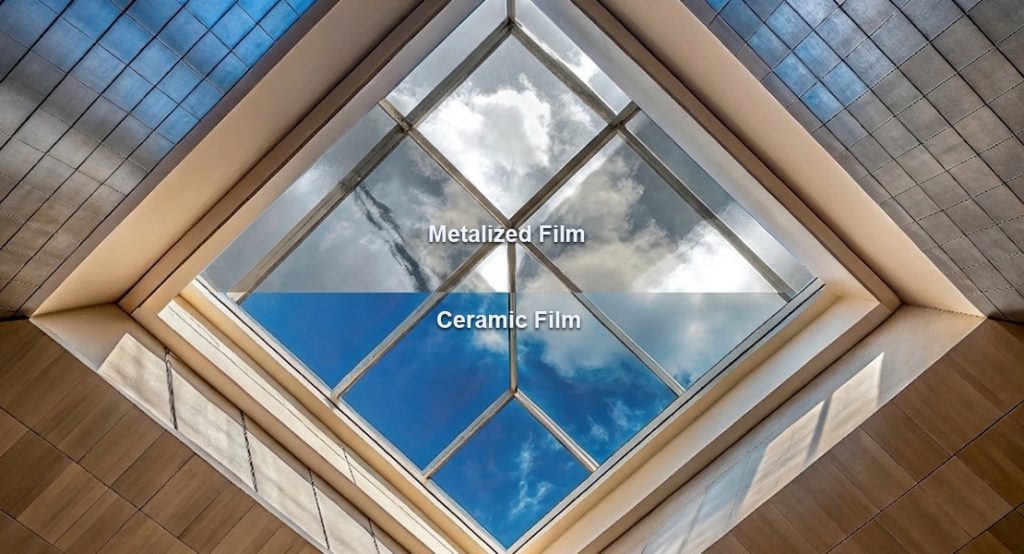
Metalized films work a little differently - they have thin layers of metal inside them, and the metal bounces heat and light back before any of it gets into your space. The price point is usually lower, and that's a big part of why so many choose them. A few tradeoffs do come along with them, though. The metal content can throw off wireless reception inside your home, and the film itself also tends to break down faster when it takes extended exposure to the intense UV that comes straight down through an overhead skylight.
Between the two, your budget and how long you want the film to last are the main factors to weigh. Metalized film can hold its own and do a decent job - if cost is the main concern, it's a workable option for most situations. A skylight that gets full sun for the better part of the day will get more out of the upgrade to ceramic, though, in raw performance and in how long it holds up before you'd need to replace it.
Protect Your Floors and Furniture From UV
UV rays are actually the main culprit behind fading floors, rugs and furniture - and a skylight gives them a very direct path right into your home. California's sun is intense, and it's active nearly all year long, which means anything underneath a skylight ends up with more damage over time.
UV damage is something that works quietly in the background. Hardwood floors lose some of their depth and warmth, upholstered furniture starts to look washed out, and artwork slowly loses the colors it once had. You usually won't see any of it until the damage is already pretty far along - we're talking months, sometimes years, of it building up. At that point, there's no way to reverse it, and the only option left is to replace what has been lost.
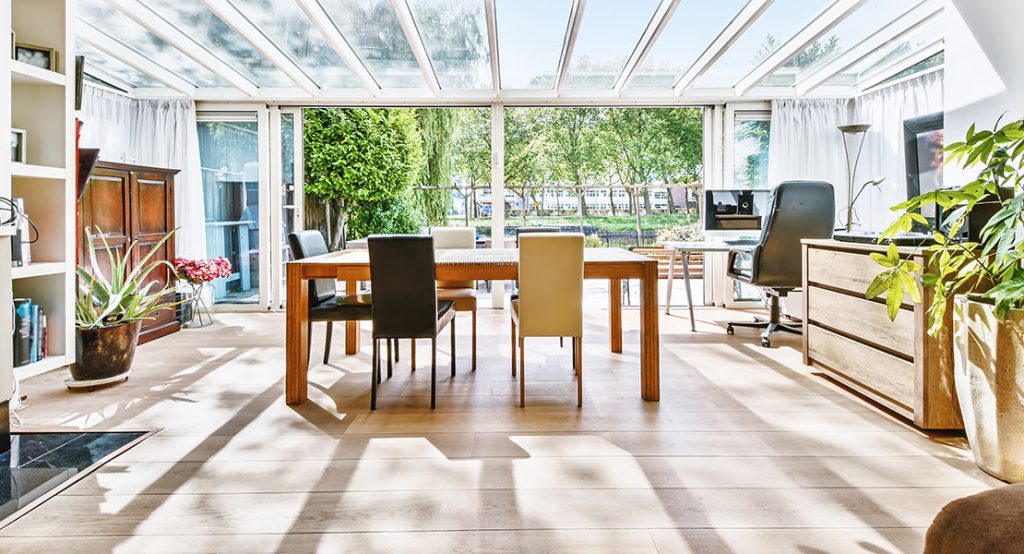
UV-blocking film is one of the best reasons to treat a skylight. A quality film can block as much as 99% of UV rays, which dramatically slows the rate of fading for everything underneath it. Rugs, dining tables, artwork and wood floors - whatever is under that skylight is quietly taking on a little more damage every day without it. For most homeowners, that alone is reason enough to do something about it.
The upside is that UV protection is one of the more reliable areas across film types - most well-made products manage it well regardless of which category they fall into. Ceramic and metalized films each take a different path to get there, and either one can realistically hit that 99% UV rejection mark. When you're ready to buy, it's worth pulling up the product spec sheet to verify the UV rejection rating. Marketing copy doesn't always give you the full picture, and a film that sounds great in a product description can sometimes fall short when you dig into the numbers.
How to Meet Title 24 with Skylight Film
California's Title 24 is the state's official energy efficiency code for buildings (it sets limits on how much heat and light can pass through windows and skylights), and it applies to new construction and renovation projects. Renovation work is where this matters most. Updating a commercial space or an older home can mean your existing skylights don't meet the latest standards anymore - and at that point, compliance isn't optional. A renovation permit can force you to bring those skylights into compliance - even if that was never a part of your original plan.
A full skylight replacement is expensive and messy - especially in the middle of a renovation. Window film can meaningfully cut down on how much solar heat and light a skylight lets through - all without any contact with the frame or the glass itself. For homeowners and property managers, that actually makes it a more workable path to code compliance for your permit.
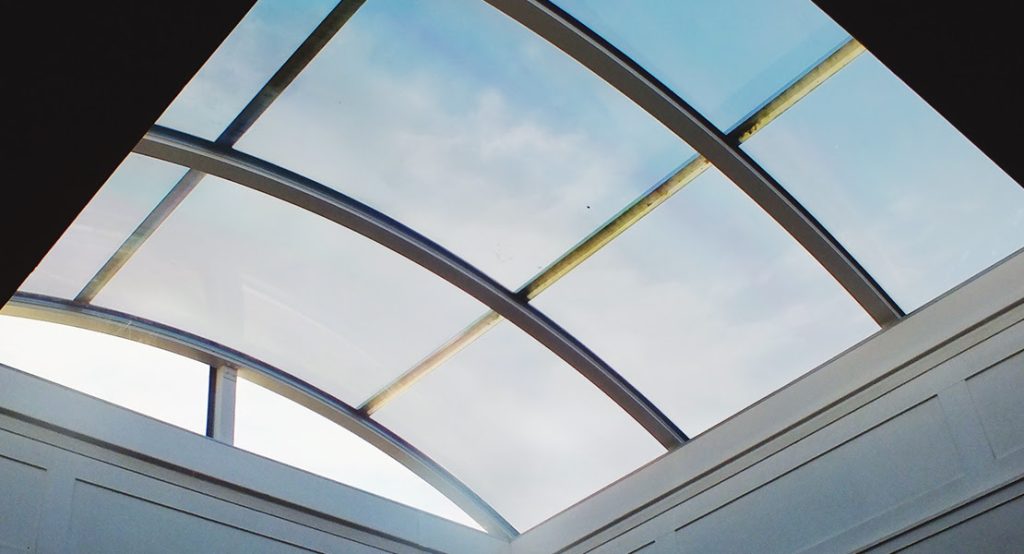
Before acting on anything, it's worth a quick conversation with a licensed installer or a building consultant. They'll pull up the exact performance values that your skylight needs to hit and then match you with a film product that can get you there. Title 24 runs on measurable numbers (specifically Solar Heat Gain Coefficient/SHGC and Visible Light Transmittance/VLT), so the target is well-defined and there's no gray area. From what I've seen, an installer will already know how to read those numbers and can tell you what your skylight needs to qualify.
In the right situation, window film is one of the easier ways to hit a compliance target without going over budget or pushing your timeline back.
Pick the Right Film for Your Skylight
With that in mind, take everything we've covered and make it a practice for your own space.
Your climate zone is where to start. A skylight in Fresno will see a very different sun load than one in San Francisco - and that gap matters when you're balancing heat rejection ratings against how much natural light you want to let in. The two like to work against each other, and your local climate tends to decide.
What's directly below your skylight matters quite a bit - a reading nook, a home workspace and a room full of wood furniture all have very different needs, and those differences are what will steer you toward the right VLT range and UV blocking level for your space.
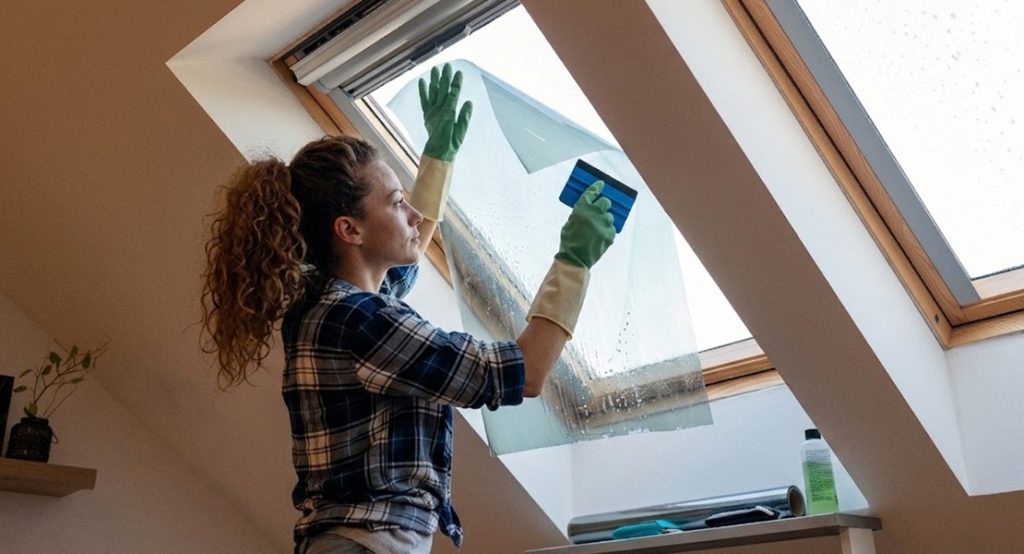
Title 24 compliance is non-negotiable if your project falls under it. Before anything else, make sure any film that you're considering hits the performance numbers that your building type calls for - get that confirmed first and then move on to everything else.
Your budget factors in here as well. Ceramic and spectrally selective films will cost a bit more at the start. But in California's high-sun climate, they hold up much better over the long run. Dyed films are a cheaper way to get into window tinting, though with the relentless heat we get out here, their performance can start to slip.
The right skylight film will look different from one home to the next. A product that works beautifully in a sunny climate can be all wrong for a room that doesn't get much light. Weigh your climate, your space and how you actually use the room - and the right choice gets easier.
Transform Your View with Professional Tinting
The right skylight film is one quietly great choice that continues to give back long after the install is done - a room that actually stays comfortable in July, energy bills that stop rising every summer and furniture that still looks the way it did a few years ago. The cost tends to be more modest than homeowners think, and once it's up, the results start coming through pretty fast.
The welcome news is that it's more manageable than it might look. Your climate, your light preferences and your budget all work together to narrow the field to just a handful of options on their own. A little honest context about your space can do the work for you - and with that in hand, the right film tends to become pretty obvious.
At some point, the research has to turn into an answer - that's where the team at OC Tint Shop comes in. We work with homeowners all over the area (from Irvine to Huntington Beach), and our installers put the same care and attention into every project, whether it's a single skylight or a full home installation.
Give us a call to set up a free consultation, and we'll work through the options with you until we find the right window film to keep your space comfortable, well-protected and as bright as you want it to be.