
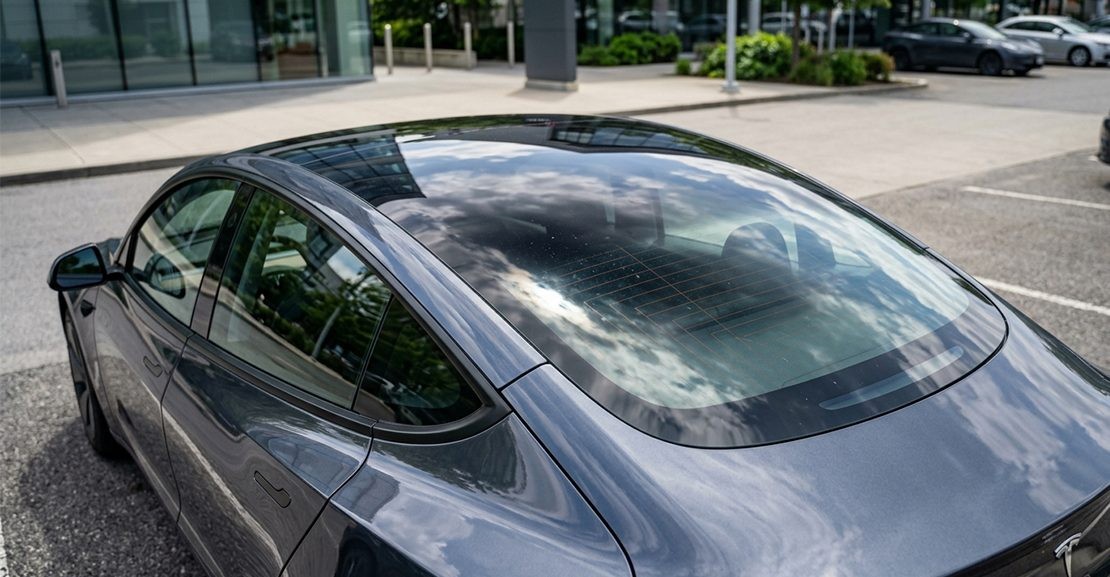
A Tesla with a panoramic glass roof is one of the nicest cars that you can drive in California - and also one of the hottest. The roof itself is something to look at, and it's hard to argue that it's not one of the best features about the whole car. Summer is a different story because that beautiful glass ceiling can turn your cabin into something closer to a greenhouse than a luxury vehicle. At some point, most Tesla owners come to the same two questions - will tinting the roof get me pulled over, and is it going to make a dent in the heat?
These two questions are worth covering. California's tint laws are pretty targeted about which windows carry restrictions, and a panoramic glass roof lands in a whole different category than your front side windows - which means that you have more flexibility with it than most people realize. As for Tesla's factory glass, it's not without merit. The UV protection is decent straight from the factory. Infrared heat is where it falls short - the kind that has everyone in the car baking even on a partly cloudy afternoon.
UV protection and infrared heat rejection are two very different matters, and most Tesla owners don't figure that out until after their first full summer in the car. UV ratings get nearly all the attention on product spec sheets - but it's actually infrared rejection that stops your cabin from turning into an oven on a hot day.
California's tint laws treat the roof panel differently, and Tesla's glass already takes care of a fair amount on its own - though it doesn't always go far enough. That's covered ahead - the tint laws around the roof, why heat rejection is a more helpful number than UV protection for comfort and what that means when you're picking a shade that fits the climate and the interior feel that you paid for.
California Roof Tint Laws Are Much More Relaxed
California Vehicle Code 26708 is the state law on window tinting, and it's worth reading before you put any money toward film. California draws a hard line at the front of the vehicle - the front side windows have to allow at least 70% of outside light in, and the windshield can only be tinted along a strip at the very top. The state takes this part very seriously - there's a reason for that. Front visibility is a safety concern for you and for every other driver sharing the road with you.
For Tesla owners, the panoramic glass roof is actually a bit of a different situation. On the Model 3, the Model Y and the Model S, that roof panel sits behind the front seats - its placement alone puts it in a whole different legal category. The 70% minimum light transmission doesn't apply to it, since California law treats it more like a sunroof than a window. The rear side windows and the rear windshield follow a similar pattern and are covered by considerably more relaxed standards within the same code.
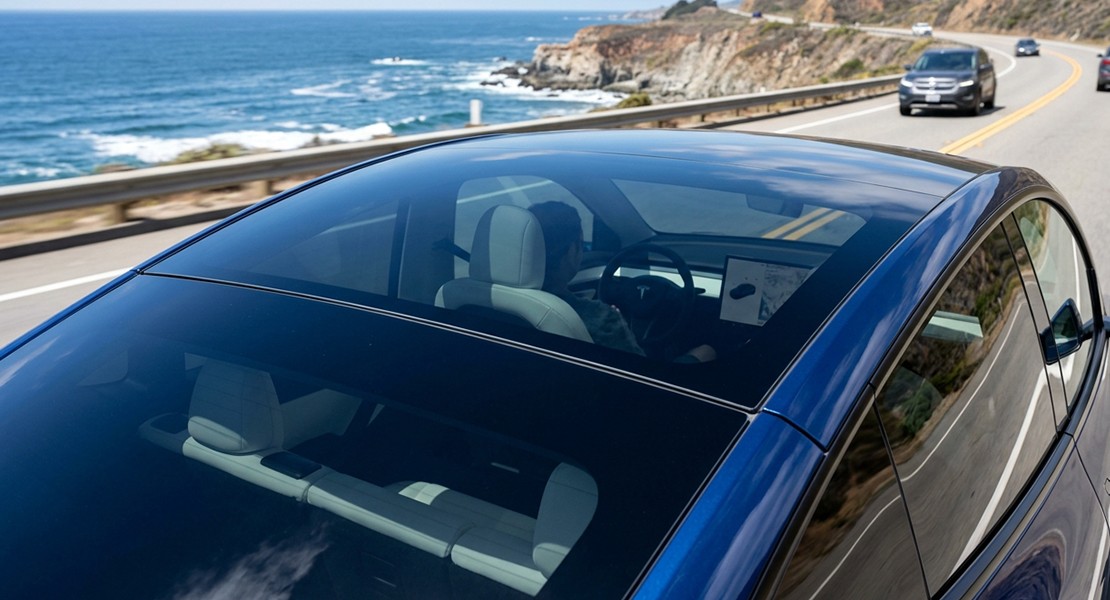
The fear of being pulled over for a tinted roof in California is not a problem. The state doesn't set a minimum VLT percentage for the glass above your head, which gives you flexibility to go much darker without running into legal problems. A deep roof tint is well within the law, and it's one of the best upgrades that you can make on a Tesla - especially if you're somewhere that gets relentless summer heat.
Before your appointment, it's worth taking a few minutes to verify the latest version of the code yourself or just call a local installer who knows California's law well. These laws do get updated from time to time, and a professional in your area will always have the most up-to-date information on hand.
Tesla's Glass Blocks UV but Not Heat
Tesla's glass roof comes with UV protection already built right into the laminated glass itself - it blocks almost all ultraviolet rays, so even a long road trip won't leave you with a sunburn through the roof. It's real and functional protection, and it delivers on that claim.
Heat is a whole other matter, though. Infrared radiation is what actually turns your car into an oven on a hot afternoon - and Tesla's glass does very little to block it compared to UV rays. What that means in practice is that the glass does a decent job of protecting your skin. But it's doing almost nothing to cut back on cabin temperature.
It's just that the protection it gives covers a much narrower range.
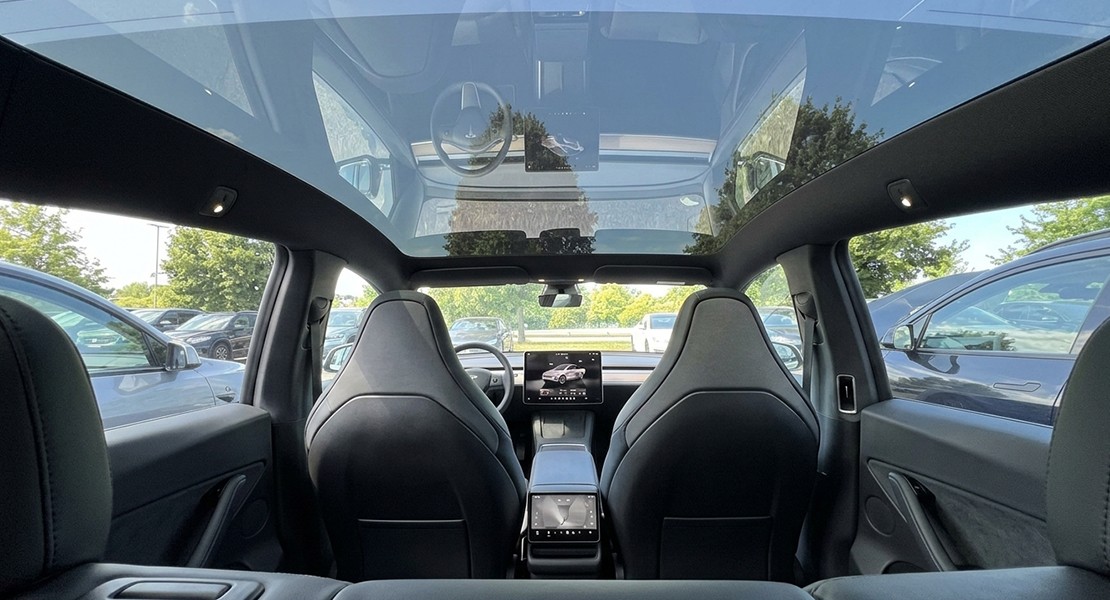
UV protection and heat rejection are two very different matters, and Tesla's factory glass was only designed to manage one of them well. Ultraviolet rays and infrared radiation come from the sun. But each of them works a little differently once it passes through your windows. UV is what causes skin damage over time. Infrared is what makes the cabin heat up. One doesn't affect the other.
For anyone on the fence about window tint, infrared rejection is the whole point of this conversation. A quality tint film (ceramic in particular) works specifically to block out infrared radiation, and Tesla's factory glass just doesn't do that. For owners, that missing piece is usually what ends up pushing them toward a tint upgrade.
Heat Rejection Matters More Than UV Blocking
The factory glass on a Tesla deals with UV light reasonably well - but ultraviolet is only one part of what's going on. Solar energy comes in three forms - ultraviolet, visible light and infrared radiation - and each one acts a little differently and has its own effect on how hot your cabin gets on a sunny day.
Ultraviolet is probably the one that you already know about - it's responsible for skin damage and the slow fade that you start to see on your dashboard, seats and interior trim. As far as UV goes, Tesla's factory glass actually does a pretty decent job. It's one of the stronger points of the stock setup.
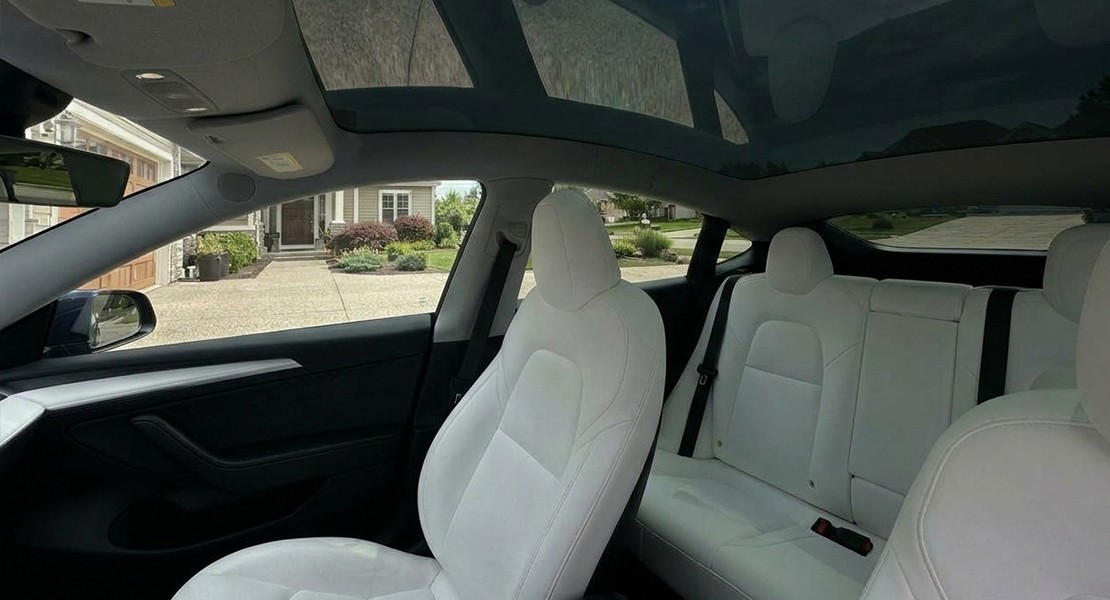
Infrared radiation works a little differently. It's invisible - and yet it accounts for the bulk of the heat that builds up inside a car on a hot day. That "sitting in an oven" feeling comes mostly from infrared radiation. Factory glass does very little to block it, so a large portion of it passes right through the window and into the cabin.
Tesla owners don't put this together until they're already out on the road. One sunny freeway drive will make it very real, very fast - the roof glass is pulling heat straight into the cabin, and the AC is already running at full blast just to compensate.
A window film can take care of this. High-performance tint can block a decent chunk of the infrared light that passes straight through untreated glass - it's what you feel on a hot California afternoon - not the visible light, but the heat that travels alongside it. Once that infrared piece starts to make sense, the choice to tint usually follows pretty naturally.
Ceramic Film Has a Big Edge on Heat
Ceramic film is by far the most popular option for Tesla glass roofs, and once you look at what it does, it makes perfect sense - it blocks a massive amount of infrared heat, and the glass doesn't look dark or tinted from the inside. The cabin still feels wide open and bright - just without the heat that would otherwise come pouring through.
This part is worth your attention if you drive a Tesla with a glass roof. A glass panel directly overhead works very differently from a standard tinted side window - the sun is hitting you from above and coming straight down into the cabin. A film with strong infrared rejection will make quite a difference in how the car feels on a warm day. On a hot summer afternoon, with that much glass over your head, the right film can be the difference between a comfortable drive and a pretty rough one.
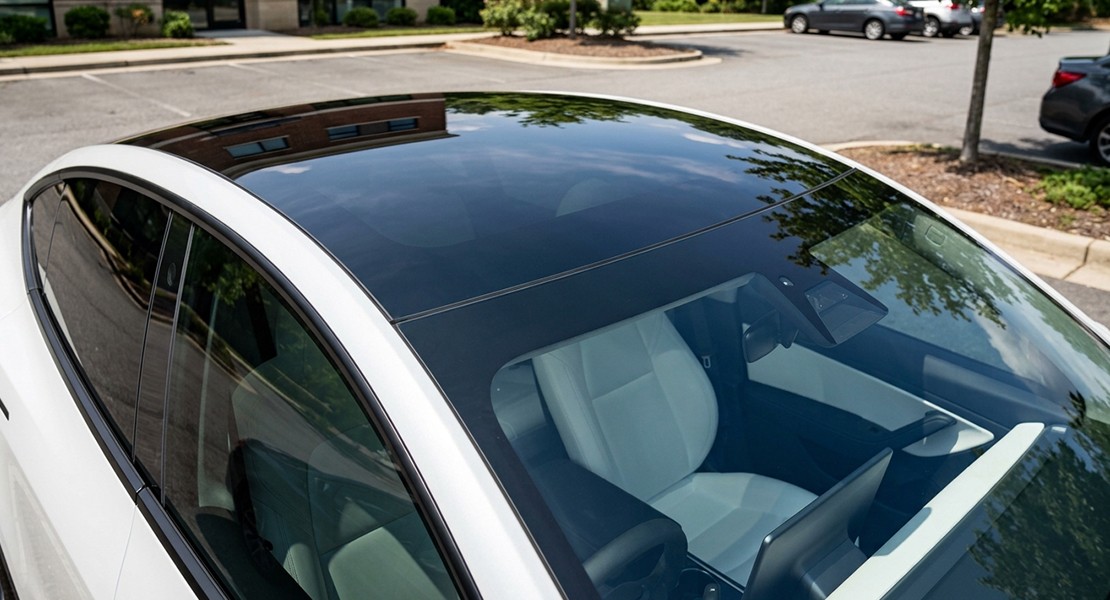
Dyed film is the other popular option, and it's usually the cheaper of the two (it absorbs the light instead of reflecting the heat back out). The difference can become pretty obvious once the sun is beating down on your car. The cabin just doesn't stay nearly as cool in direct sun.
Every film option has a darkness level, and it's one of the details that you want to get right. Installers measure it with something called Visible Light Transmission, or VLT - a lower percentage means a darker film. Go too dark, and you start to lose that open feel that made the glass roof worth it at all. Most Tesla owners who go with ceramic usually land on a lighter shade - one that still blocks the heat and lets enough natural light through.
For a glass roof, ceramic is legitimately hard to argue against. The heat rejection is a big step up from the other options. The look stays clean and soft, and you don't have to trade anything away for it.
How Tint Helps Your Range and Comfort
For Tesla owners in California, two factors usually matter most on a long drive - range and how comfortable the cabin stays. Ceramic window film helps with both, and it's worth a quick look at why before making any decisions.
A glass roof can pull in heat on a sunny California day. All that warmth collects inside the cabin, and your climate control system has to work much harder just to bring the temperature back down. On an electric vehicle, that extra demand draws directly from the same battery pack that's actually powering the car. It's not a massive hit - but it's a real one, and it piles up faster on hot days when the air conditioning is already running at full blast.
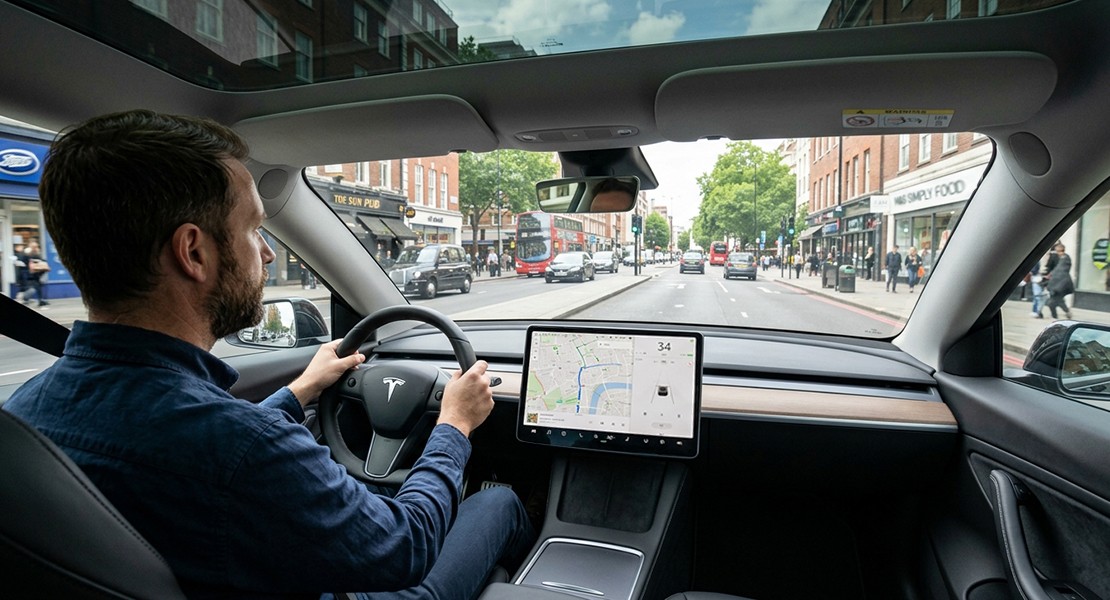
On the comfort side, the heat buildup is what drives everything else. Leave a car in a parking lot for a couple of hours on a July afternoon, and the interior gets very hot. Ceramic tint on the roof helps with that - the cabin doesn't pull in nearly as much heat from the start, so the car cools down faster and the AC doesn't have to work as hard. The back seat passengers will feel this the most, as they sit directly under that glass roof and are most exposed to the radiant heat.
That said, the tint alone won't dramatically change your range numbers. The efficiency gains from cutting down on the climate load are real but modest. What ceramic film does well is make the cabin far more comfortable and take a bit of pressure off your battery when temperatures climb - and in California, that's most of the year.
Sunshade or Tint for Your Glass Roof
A glass roof looks beautiful. But the sun pouring through it all day is a whole different problem. As it happens, Tesla makes their own interior sunshade for the Model 3 and Model Y - it fits right into the roof panel with no permanent changes to the glass whatsoever.
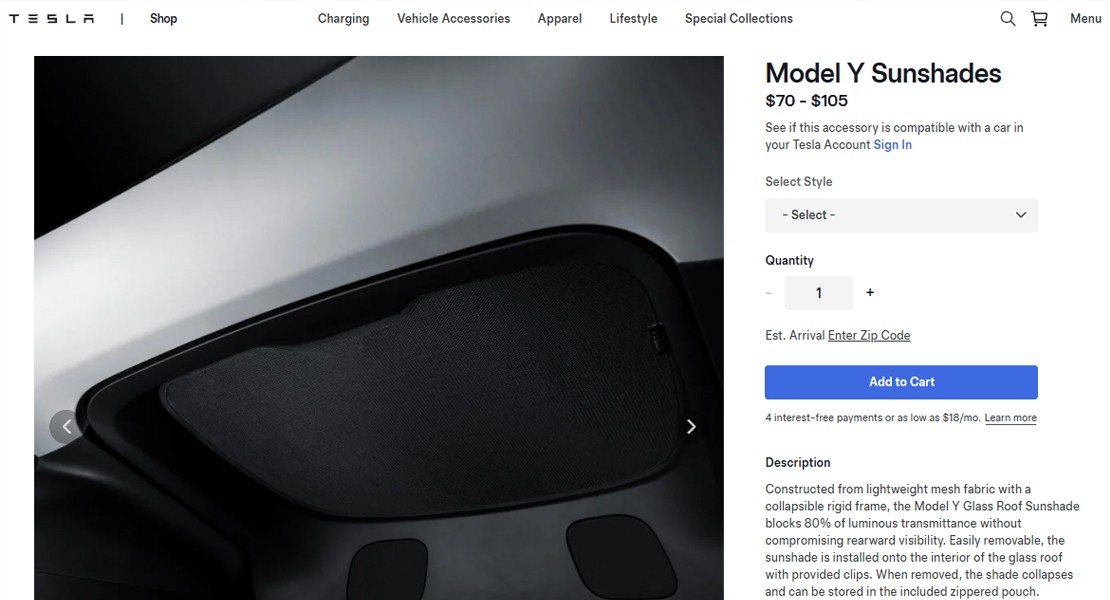
It's a removable panel, which means you can take it out or put it back in at any point. That flexibility is hard to come by - and it means you're never locked into one position or the other.
Third-party shades are another option - most of them attach with suction cups or small clips, which makes them a little easier to pop off than Tesla's own version does. Owners will pick one up just for long road trips or the worst weeks of summer heat. The main downside is that the shade has to live somewhere when it's not on the window, and if your car is already a bit short on storage, that can get old pretty fast.
The question worth asking is what you actually give up when that shade goes up. A glass roof is something that owners choose for a reason - they want that open feel inside the cabin and a shade does take that away, at least as it's raised. Tint keeps the view wide open and does its job without any extra thought or effort from you - it's a permanent change, though - that's what makes owners pause.
Pick a Shade That Works for You
The right call here will be different for everyone - and it can depend on a few personal factors that only you can work out for yourself.
If your car sits outside all day through a California summer, the cabin can get pretty brutal by noon - and a film with strong infrared rejection is probably the best fix for that problem. The catch is that darker doesn't always mean cooler. Some of the best heat-blocking films on the market are nearly see-through, so more tint doesn't automatically translate to more relief.
Natural light deserves some thought before you lock in a VLT level. At 70%, the film is nearly invisible - your glass stays bright, and the interior feels mostly unchanged. Going down to 50% or lower changes the whole mood of the cabin. On overcast days, it gets noticeably darker in there, and when the sun is out, the contrast feels almost dramatic. Plenty of drivers actually like that look. Others wish they had gone a shade or two lighter once they live with it for a while.
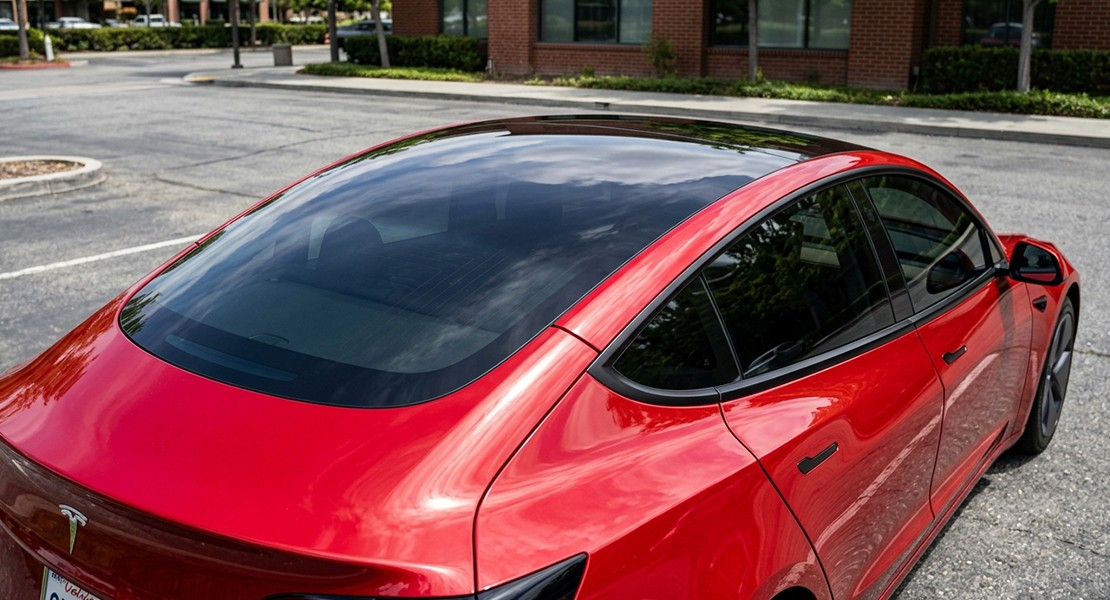
Your budget is part of this. Ceramic films cost more than dyed films, and professional installation on a Tesla's panoramic roof can get expensive fast. That said, the extra cost up front for a quality film is usually worth it - a film that starts to fade or bubble within two years will cost you more money anyway, between the removal and the reinstall.
Some buyers regret the choice to go too dark on the roof panel. A windshield is something that you look through - a roof panel is something that you look up at, and those are two very different experiences. A heavy tint up there can make the whole cabin feel noticeably smaller and closed in.
A professionally installed film is built to last. But it's not permanent if your needs ever change. Temporary covers and shades are a low-stakes way to get a sense of how much shade works for your space before you commit to a full installation.
Transform Your View with Professional Tinting
California summers make every car-related choice feel a little more urgent, and the glass roof question is no different. The law in this state gives you plenty of room to work with, the heat management technology does its job, and the call between a permanent film and a removable shade is yours to make. No single right answer exists here - just the one that lines up with how you drive, where you usually park and how much thought you want to put into it on any given afternoon.
UV ratings and heat rejection are two very different concepts - and once that distinction clicks, the uncertainty around window film starts to sort itself out on its own. The darkness level, the film type, the whole shade-versus-tint debate - it gets much easier to work through once you have a sense of what problem you're trying to fix. Start there first and be honest with yourself about your climate and your budget, and the rest of the choice will follow from there.
At some point, the research has to end - that's where OC Tint Shop comes in. We've installed film on thousands of vehicles across Orange County, and we can tell the difference between a product that reads well on a spec sheet and one that actually holds up through a California summer. Feel free to book an appointment or reach out first if you just want to talk through your options - we'd love to help you figure out the right next step together.