

California sits on some of the most active fault lines in the country, and yet for most homeowners, windows are just about the last item that makes it onto a preparedness checklist. The water heater gets strapped down, a go-bag ends up by the door, and maybe a few weeks’ worth of extra food gets tucked away somewhere – all great moves. But that one almost never comes up until something goes wrong.
The oversight makes sense, to be fair. Windows look and feel sturdy – they hold up just fine against wind, rain and the stray baseball from next door. Earthquake force is a whole different matter, and standard residential glass was never built with that in mind. Once the ground starts moving hard enough, those panes can shatter fast and send fragments flying in just about every direction. At a time when everything else is already going wrong, that’s a hazard to have on your hands.
Retrofit safety film was designed to manage that problem – it bonds directly to the glass and holds the pieces in place when a pane shatters, which dramatically cuts down on the flying fragment danger. For California homeowners, it’s probably a more worthwhile product to look into than it would be just about anywhere else in the country.
Safety film comes in a pretty large number of thicknesses and materials. Installation methods can vary quite a bit from one product to the next – each of the variables can affect how well the film holds up when it matters. A thinner film with a sloppy installation won’t come close to a heavy-duty product that was put in correctly by a professional. All three elements (the material, the thickness and the quality of the installation) have to come together for the film to actually do its job. Without that, what you’re left with is something that looks right on paper but won’t deliver when it counts.
Let’s get into how safety film can protect your California home from earthquakes!
The Real Danger of Broken Glass
Broken glass is one of the most common sources of earthquake injuries, and most families have no idea. FEMA says non-structural hazards (like windows that shatter) account for a large share of earthquake-related injuries, and this applies even in moderate earthquakes that never actually bring a building down.
A scenario makes this easier to picture. Your kids are at the kitchen table with their homework, right next to the sliding glass door. The ground starts to shake. The glass shatters, and those sharp pieces fly across the room in just a few seconds. It’s a dangerous situation – and one that happens in homes all over California more than homeowners know.
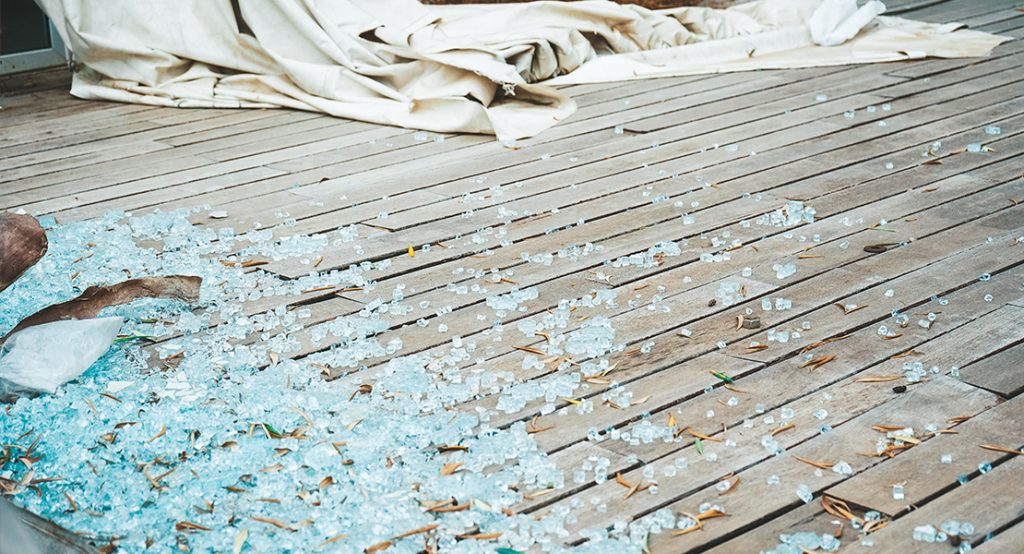
At night, this gets even more dangerous. A window that’s directly above a bed (or just anywhere near where a child sleeps) leaves almost no time to respond if something goes wrong. A frame that stays in place doesn’t protect anyone either, because the pane itself can crack and scatter even if the frame holds.
Part of why windows get skipped over is that they do look sturdy and safe – glass doesn’t rattle, it doesn’t sag, and there’s nothing visible to hint at a problem. Because of that, windows almost never make it onto earthquake prep checklists – it’s true even in homes where the owner has otherwise done a pretty careful job of it. In my experience, it’s one of the more ignored gaps in home earthquake preparedness. Glass can go from fine to a hazard in a matter of seconds during a quake – it’s worth tackling before someone gets hurt.
How Safety Film Holds Your Glass Together
The safety film bonds directly to the surface of your glass. When a window breaks, it holds the pieces right in place instead of letting them scatter everywhere.
When an earthquake hits, and a window shatters, the film is what holds the glass fragments together so they don’t spread across the room. The glass stays right where it landed (either held in the frame or connected together) instead of becoming sharp pieces. That one detail can matter quite a bit for your family in those first few moments after a quake. Airborne glass is actually one of the most common ways residents get hurt during seismic events. Most homeowners don’t give that nearly enough thought when they prepare their home for it.
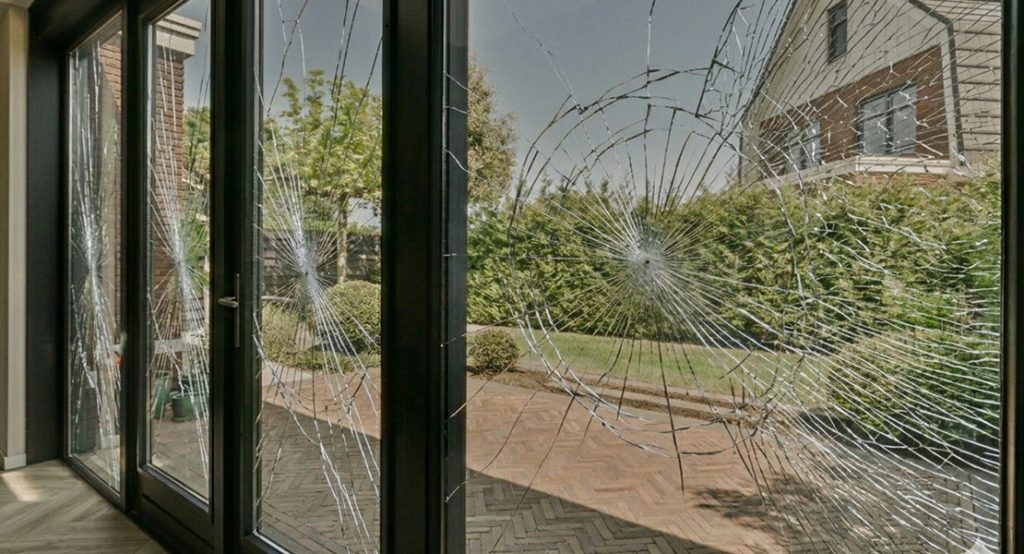
It also matters in the moments right after the shaking stops. If your family needs to move through the house to get outside, the film means there’s far less glass on the floor and in the air. That’s not a small detail, especially with children in the home.
The core idea is pretty easy – instead of having shattered glass come down on you, the film holds it in place so you can get out safely. That’s the whole point. For windows in living areas, bedrooms or any room where your family spends time, it’s a pretty worthwhile addition – especially if you’re in an area with any known seismic activity. It’s also pretty low-effort to have installed. Once in place, you don’t have to remember it again.
How Thick Should Your Window Film Be
Of the decisions you’ll make with earthquake safety film, thickness is the one that matters most to get right – and in my experience, it’s also the one homeowners like to rush through. Window films are measured in “mil,” which is a unit equal to one-thousandth of an inch. Most products on the market fall between 4 mil on the thin end and 12 mil on the thicker end.
8 mil or thicker is what most pros will recommend for earthquake protection. A thinner film can hold the glass together reasonably well under day-to-day stress – a stray baseball or a minor hit, that kind of impact. But with an earthquake, the film has to work much harder than that. Aftershocks can roll through for hours or days after the first event, and a lighter film just might not hold up through that repeated movement.
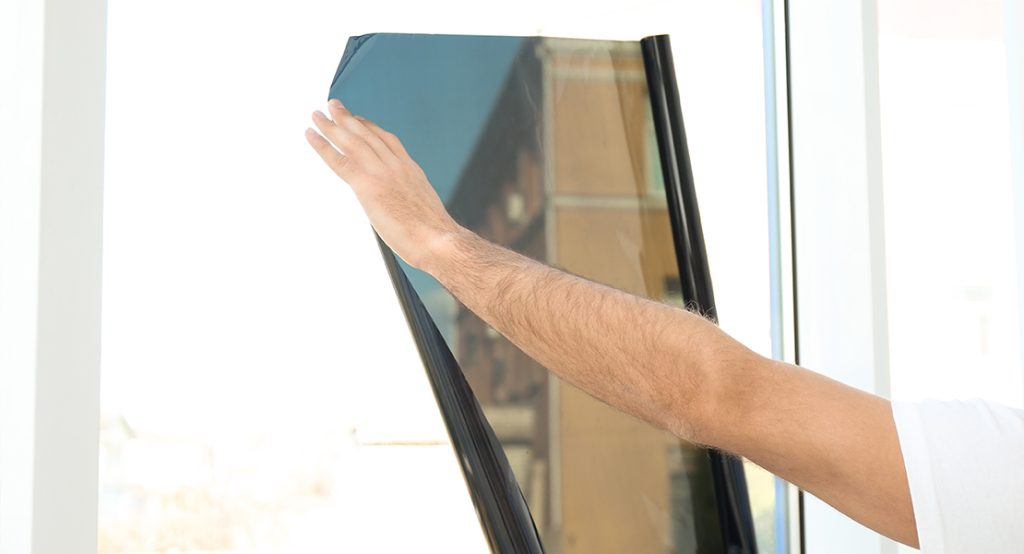
Something worth asking yourself is what you’re asking the film for (it’s to hold the shattered glass against the frame as the ground changes, settles and then changes again). In an earthquake, that cycle can repeat quite a few times – a lot to ask of any adhesive material. The thinner film options out there just weren’t made to hold up under that repeated stress.
A 4 mil film is a fine choice for UV protection or basic security – for those purposes, it gets the job done. Where it starts to fall short is in seismic protection. For staying safe from broken glass during an earthquake, 4 mil just doesn’t leave you much margin. The added thickness of an 8 mil or heavier film is what actually gives it the tensile strength to stay bonded under repeated stress – and that’s the whole reason to put the film on the window.
Older Homes Have the Most to Gain
Glass safety in California homes depends quite a bit on when the home was built. Any new construction in recent decades has to meet updated building codes, which specifically call for tempered or laminated glass in all windows and doors. But millions of homes were built long before any of that was the norm, and plenty of them still have the original standard annealed glass throughout.
Annealed glass is the untreated version of glass, and it doesn’t break the same way tempered glass does. With tempered glass, the whole point is that it’s designed to crumble into small and fairly safe pieces when it shatters. Annealed glass behaves differently – it breaks into jagged shards that can travel fast and far across a room during a quake. The 1994 Northridge earthquake is probably the best-known example of just how bad glass damage can get in a seismic event. Older buildings in the affected areas were hit hard – glass shattered on a massive scale, and the broken fragments caused serious injuries to individuals inside and outside those structures. It’s a case that comes up again and again in seismic preparedness discussions, and for obvious reasons.
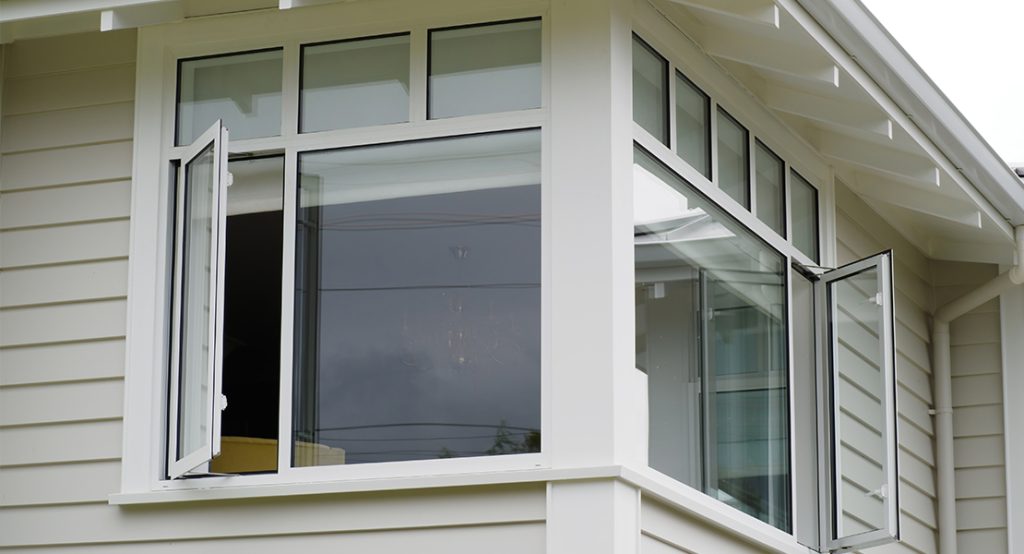
Retrofit safety film is one of the most worthwhile upgrades you can make for pre-code homes. When glass takes a hit, the film holds everything together so the pieces stay put instead of scattering across the room. A full window replacement is expensive and disruptive, and with safety film, you can skip all that and still get that protection. Safety film on your existing annealed glass gets you most of the protection you need – and in my experience, most homeowners are legitimately relieved just to learn that’s even an option.
Safety film is a great middle-ground option that’s worth keeping in mind. The install is pretty painless, and the price is nowhere near what new windows would cost. The extra protection it gives you during an earthquake makes it well worth the effort.
How Safety Film Compares to Full Replacement
Safety film is an upgrade where the pricing makes sense when you look at it. A professional installation will usually run between $5 and $15 per square foot, and the final number just depends on the product you go with and who ends up doing the work. A standard single-hung window covers around 15 square feet of glass, so even at the higher end of that price range, you’re looking at roughly $150 to $225 per window. Multiply that across an entire house, and the total will add up – but it’s still a small fraction of what a full glass replacement would cost you.
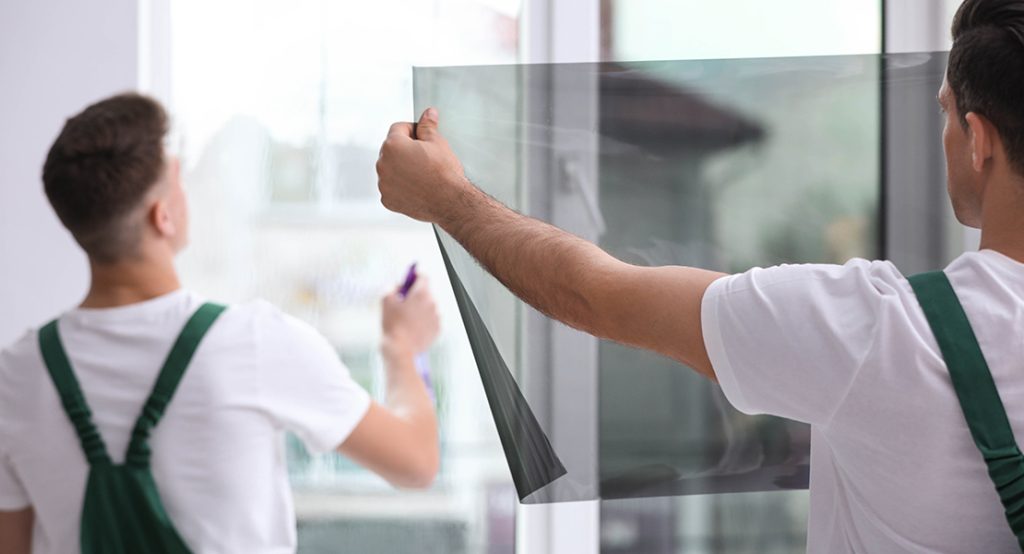
Full laminated glass is the gold standard for home safety, and it’s well worth it if it fits your budget. Safety film is the more practical route for most homeowners, though – especially those with a lot of windows – because it gives you actual protection across your entire home, so you won’t have to choose which rooms get covered. That flexibility is a big part of why it’s become so popular with homeowners who want strong protection without the premium price tag.
Go through your house and count the windows in the rooms that your family uses the most – it’s a quick but worthwhile exercise. Multiply that number by 15 to get a rough square footage estimate and then price it out at each end of the range. In my experience, once homeowners actually sit down and run the numbers, the total ends up far more manageable than they’d expected – especially for everything you’re getting out of it. A few hundred dollars per room for added shatter resistance and UV protection is a great deal.
What Safety Film Can and Cannot Do
Safety film does actual work – but like any product, it has its limits, and a little context on what it was designed for goes a long way. If a window breaks during an earthquake, window film holds that shattered glass together in one piece instead of letting it scatter across the floor. That one job alone can stop quite a few injuries from happening. What it won’t do is stop the glass from breaking altogether.
One more detail worth knowing – film alone can’t rescue a weak or damaged window frame. A frame that’s already loose, rotted or poorly anchored to the wall is a problem that no amount of film can fix. The frame is what anchors the whole window to your structure when the ground shakes hard. Without a strong one, everything else that you put on the glass is secondary.
That’s why film works best as part of a bigger system – one that also has frame reinforcement and some anchoring. The film alone can only do so much. A strong frame holds the window in place, and the film holds the glass together if something goes wrong – each one does a different job, and neither can replace the other.

Before doing anything else, it’s worth asking if your window frames are actually part of the problem – and in many cases, they are. A walk around the house with a close look at each frame is the right place to start. Soft wood, visible gaps or any movement as you press on the frame are all signs that the frames need some reinforcement before anything else gets fixed.
A bad frame will limit what any film can do for you, no matter how well-made the film is. Get the frame in shape first, and the film will take care of the rest.
How to Do Your Window Film Right
Film thickness is one of the specs that doesn’t get nearly enough attention for earthquake safety. Products in the 8 to 12 mil range hold broken glass together much better than the thinner alternatives out there, and the adhesive quality matters just as much as the thickness itself. A pressure-sensitive adhesive with a strong bond rating for structural applications is what you want to look for. A warranty of 10 years or more is also a great sign that the product is built to last and that the manufacturer actually stands behind it.
Professional installation is well worth the extra cost. A film that gets put in poorly can start peeling at the edges well before any earthquake ever hits, and once that starts, the whole installation is ruined. Even a small gap where the film meets the frame is enough to make it come loose and fail the second everything starts shaking.
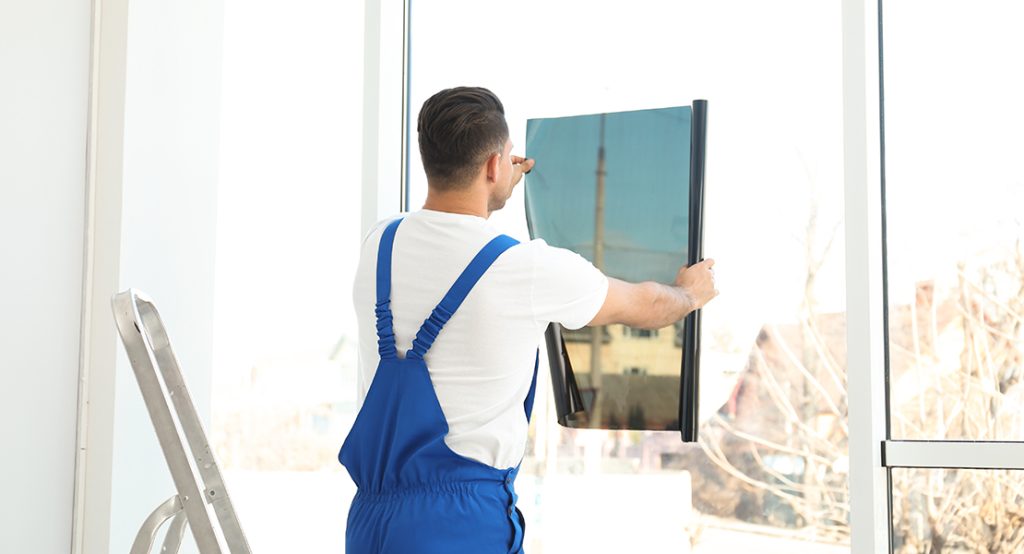
The way installation is done matters more than it gets credit for. Anchored systems (where the film gets sealed directly to the window frame) hold up much better than floating installations, where the film just sits on the glass with nothing anchoring it in place. That seal along the edge is what holds the film in place under stress, which is what you need from it when it counts.
Before any work begins, ask your installer if they plan to use an anchored or floating system. Not every installer out there has genuine experience with seismic-grade work, and this is one area where it matters quite a bit. A little extra time up front (put toward the right person and the right product) will make a real difference in how well your windows hold up over time.
Transform Your View with Professional Tinting
Every now and then, a home improvement project comes along that’s affordable, easy to do yourself and genuinely within reach – not something worth waiting on. Window safety film is one of those projects.
Glass never makes anyone’s list of home safety anxieties – there’s no visible wear, no warning signs and nothing that would obviously flag it as a problem area. That said, window glass is actually a pretty big vulnerability during seismic activity. Standard windows can come apart fast under that stress – getting ahead of it just makes sense.
Safety film won’t make your home earthquake-proof, and it doesn’t pretend to. What it does is address a weak point in your home’s defenses – affordably, practically and in a way that’s available to just about any homeowner. Hitting all three marks at once is pretty rare – and worth your attention when it happens.
If window film for your home or vehicle has been on your to-do list, OC Tint Shop is ready to make it happen. We’ve worked with homeowners and drivers all across Orange County (Irvine to Fullerton and everywhere in between), and we put genuine care into every installation, from the materials we use down to the smallest details. Safety film for your home, heat reduction for your car or UV protection for your interior – whatever direction you want to go, our team helps you find the right fit and get everything taken care of. Give us a call to set up your free consultation and see what the right film can do.