
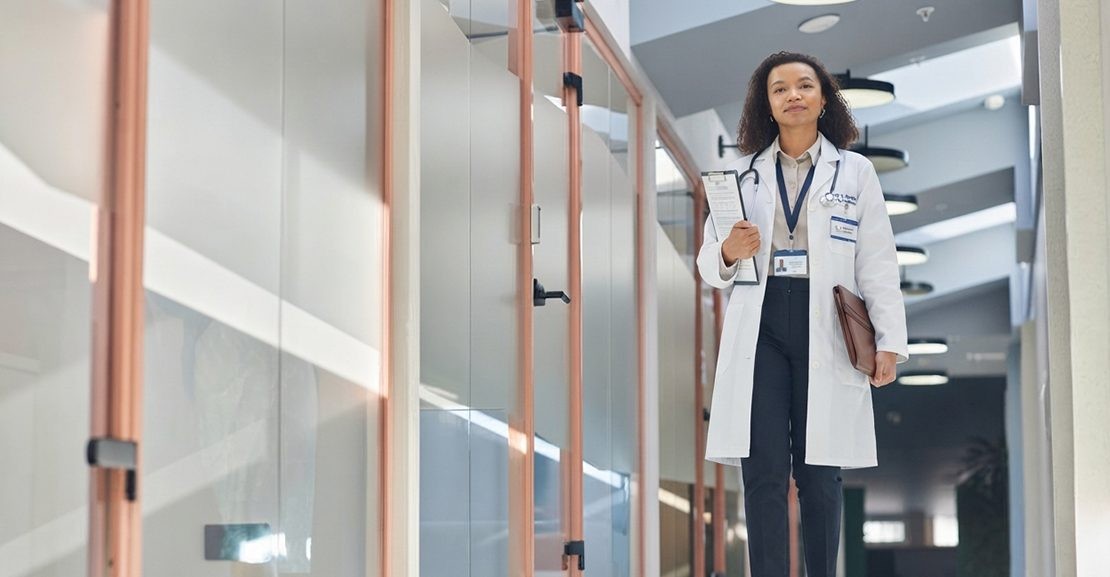
Medical offices are home to some of the most sensitive personal information that exists, and yet reception windows, partition glass and exam room sidelights put that information on display every day. A patient at the check-in counter can read another patient's chart right off the screen without even trying. A person who walks past a consultation room can look through an uncovered sidelight and see documents that were never meant for their eyes. For practice owners and office managers in Southern California, that exposure is a concern - there's regulatory pressure to worry about, patient trust to protect and a budget that probably doesn't have much wiggle room.
Southern California brings a whole other layer to the problem. The sun is relentless for most of the year - it pours into waiting rooms, makes staff squint at screens near the west-side windows and fades the furniture way ahead of schedule. Blinds are the standard fix for offices. But they collect dust, block out natural light and do nothing for the look and feel of the space. Etched glass is a beautiful option. But the price tag and the lead time put it out of reach for most practices. Frosted privacy film lands in a more helpful middle ground - it blocks the view from outside, cuts the glare way down and can even display the clinic's logo, all without any renovation work or a big budget commitment.
Medical offices that get window film right will have a space that protects patient privacy, checks off every compliance box and feels comfortable - all from one pretty affordable upgrade. I'll talk about why privacy matters on the compliance side, which areas inside a medical office make the most sense for film, how the Southern California sun plays into it, what it's all going to cost and how to find an installer who actually knows what they're doing.
Let's talk about how frosted privacy film matters in your medical office!
Why Patient Privacy Matters More Than You Think
Walk into any family clinic on a busy Monday morning, and you'll probably get to watch this play out. A patient steps over to the reception window to check in, and the person right behind them can already read the name on the intake form (and hear every word of the exchange). It doesn't take long. But that short window of exposure can leave quite an impression.
Patients sense immediately when they feel watched - and waiting rooms give them plenty of reasons to. Glass partitions or uncovered sidelights near the front desk can put personal information on display without anyone intending it. Sign-in sheets, open computer screens and loose paperwork near a window are all visible to anyone seated nearby, and most practices underestimate how big a problem that can be.
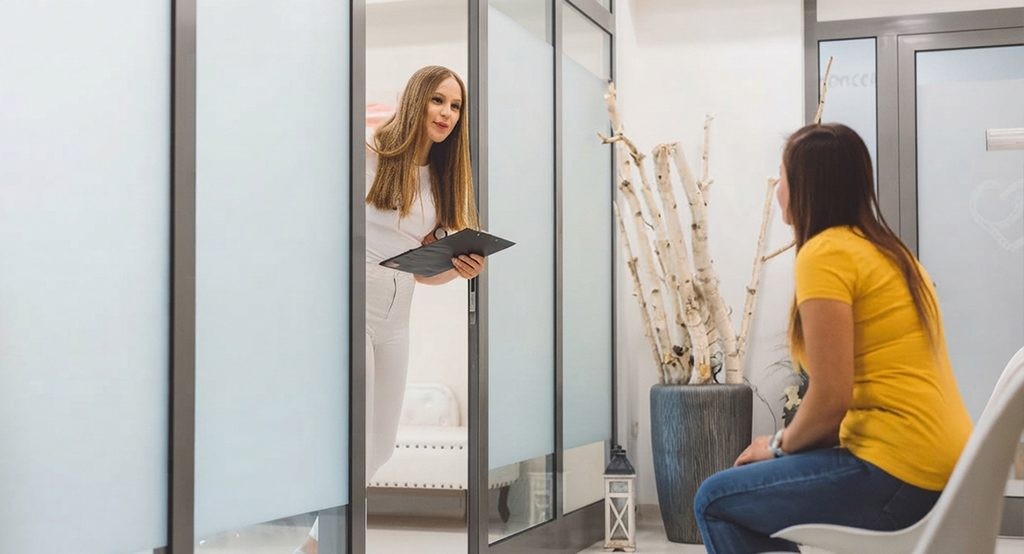
Exam room doors with small glass inserts are another place where patient privacy can start to break down. A patient inside might not be able to see who's walking by in the hallway. But the feeling that others could see in is very much there. That feeling alone is usually what stops a patient from being open with their provider.
The value of a private space is that patients feel unseen - like their visit belongs only to them. When that trust is in place, they're likely to be more honest about their symptoms and far more comfortable during the appointment. That level of comfort and honesty is what actually builds a strong relationship between a patient and a practice.
Quite a few clinics have found themselves in an awkward situation after a patient flagged an exposed screen at the front desk or a sign-in sheet that was left out where anyone walking by could read it. Moments like these aren't the end of the world. But they do chip away at a patient's confidence in your practice. Visual privacy is something patients pick up on long before they have the words for it - and when it's not there, it registers. The encouraging part is that a few small adjustments to your layout can do quite a bit.
Frosted Film That Meets the HIPAA Standard
HIPAA has a standard called "reasonable safeguards," which means your practice needs to take workable steps to protect patient information from being seen or overheard by anyone who shouldn't have access to it. Windows and glass partitions fall right into that category - and it's one area most medical offices like to put off until it's already become a problem.
HIPAA doesn't include a product list or any ready-made answers. It's not going to tell you which film to buy or how to set up your partitions. What the regulation asks for is that your office makes a sensible effort to protect patient privacy - and then the rest is on you.
For most practices, that flexibility is a genuine relief. Frosted window film blocks the sightlines into exam rooms and reception areas without any need to tear down walls or to budget for a full renovation. It's affordable, low-effort, and it sits well within what most regulators would call a sensible privacy measure. As for installation - it's no more disruptive than hanging a picture frame.
The HHS Office for Civil Rights has actually pursued enforcement cases over patient information being visually exposed - at a check-in desk, in a waiting room, wherever anyone nearby could just read it. Visual privacy is an enforceable part of HIPAA compliance.
Audits are a genuine concern for most practices, and frosted film holds up quite well when regulators get involved. It won't close every compliance gap on its own (no single product will). But for window and partition privacy specifically, it gives auditors something concrete to point to as a documented effort.
For practices that are mid-checklist and need a win, it's about as low-effort as it gets.
The Best Glass Spots to Cover With Film
The next step is figuring out where everything needs to go, and a slow walk through the space is what this is for. Try to see the office through the eyes of a first-time visitor - with no idea where to look or what to expect when they get there.
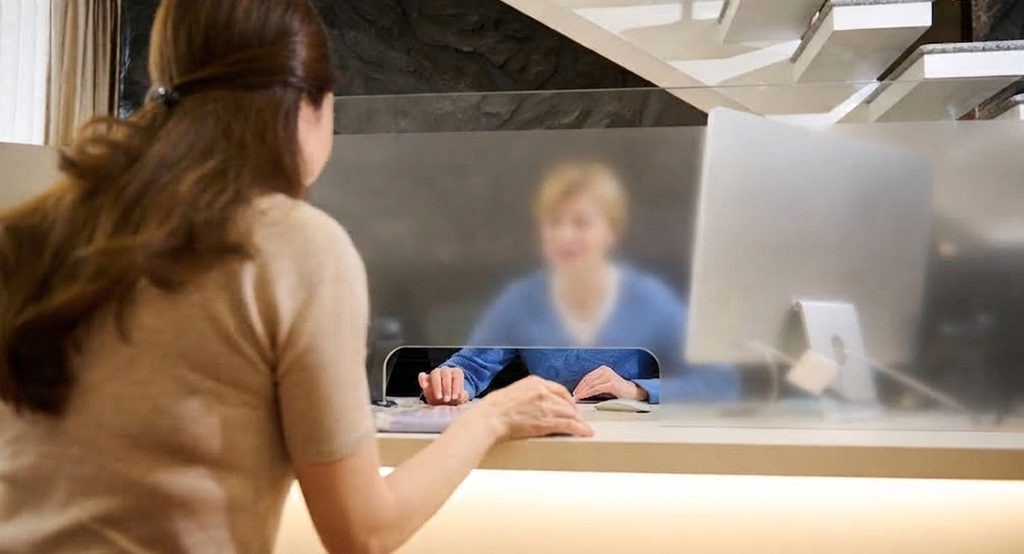
The front desk is always a great place to start. Reception windows and glass partitions are usually the first place where a patient's name, their paperwork or whatever happens to be on the screen can be seen from the waiting area. Partial-height frosting works fairly well in these areas - it covers the view of the desk as the upper portion stays open for face-to-face conversation and natural light.
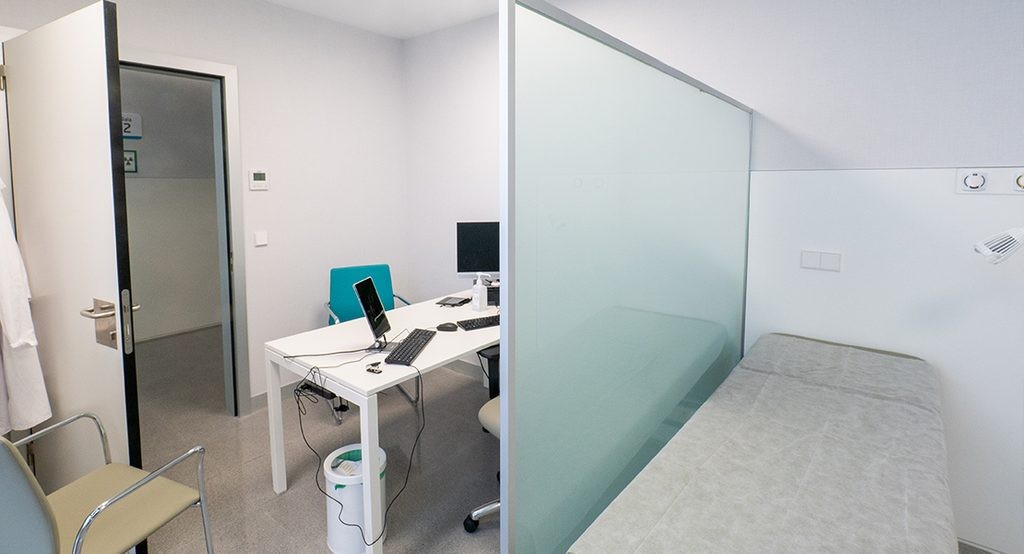
From there, move on to your exam rooms and consultation spaces. The sidelights next to those doors can be easy to forget - they're narrow, and most staff don't give them a second thought. A small strip of glass can still give anyone in the hallway a direct view into a private conversation. Even a thin layer of frosted film on those panels goes a long way.
Interior office windows are worth a second look. A staff member's monitor that's visible from a hallway or shared space is a privacy gap and one that can go unnoticed fairly easily. Walk the path that a patient would actually take through your office and stop at every angle where a screen or a file folder could come into view.
More coverage isn't always the right move, and it's worth keeping that in mind. You don't need to frost every glass surface in the building. Some places in a medical office need staff to have a direct line of sight for their work, and frost applied in the wrong place creates new problems that are harder to undo than the privacy issue that you were trying to fix. The goal is targeted placement - not a blanket treatment across every pane of glass.
Block the SoCal Sun with Frosted Film
Southern California is famous for its sunshine - and if you run a medical practice out here, that sunshine isn't always your friend. A western exam room can get very hot by mid-afternoon, and the staff can develop eye strain from the glare on their screens all day. Patients in the waiting room aren't very comfortable either. None of this feels urgent enough to fix right then and there. But that low-grade discomfort tends to accumulate over a long day - for everyone in the building.
Window film is one of the better ways to take care of this. Most films are built to block UV rays and cut down on glare at the same time, so one product takes care of sun protection and a bit of added privacy for your patients. That double-duty fix is well worth it when you're in an area where the sun beats down for most of the year.
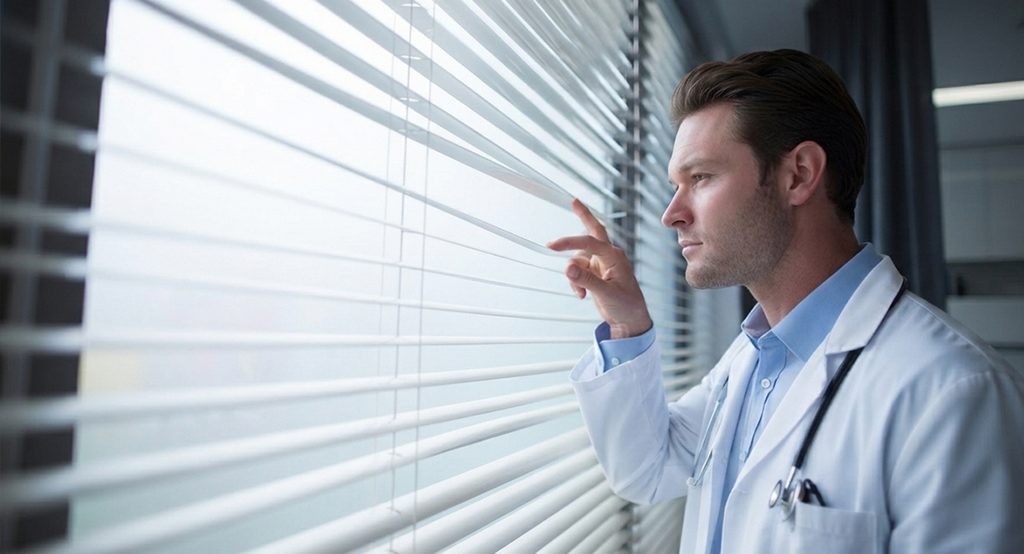
Long-term sun exposure takes quite a toll on your interior, and it's something that tends to get missed. Furniture, flooring and waiting room decor all take a beating from direct sunlight day after day - and since the fading is so gradual, most of the damage has already set in by the time you actually see it. Frosted film on your sunlit windows slows that process down considerably, which means your space stays well put-together for a bit longer.
Rooms that get plenty of direct sunlight put quite a strain on your HVAC system just to stay at a comfortable level - and over time, that shows up in your energy costs. Frosted window film takes that burden off with no extra equipment and no added maintenance, just less heat through the glass. For a medical practice with a close eye on overhead, that passive efficiency can pay for itself pretty fast.
Film Costs Less Than Blinds and Etched Glass
Frosted film is one of the most budget-friendly ways to add privacy to a medical office, and the cost difference between it and most other options is pretty wide. At roughly $5 to $15 per square foot to install, it fits comfortably into the budget of a small independent practice.
Etched glass, in comparison, can cost two or three times more - and once installed, it's permanent. The work can't be reversed, adjusted or removed if your situation ever changes. Some practices look into partition walls. But they take up floor space. That lost square footage starts to matter fast when exam rooms are already on the smaller side.
Blinds are usually seen as the budget-friendly option, and they're not an unreasonable starting point. But the long-term costs are worth weighing. Dust accumulates, and they wear down and eventually need replacing. In a medical environment, they can become a legitimate sanitation concern. That maintenance adds up as a cost - one that's easy to miss when attention is on the up-front price alone.
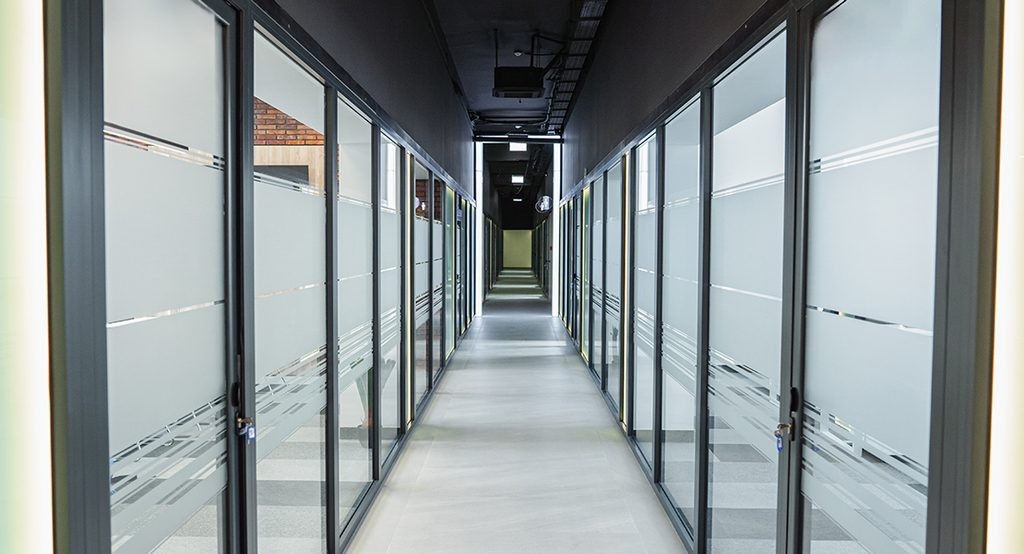
Film, on the other hand, is easy to keep clean. A quick wipe-down is all it needs, and it tends to hold up well for years without much attention. For a solo practitioner or a small group practice with overhead to manage, that low-maintenance reliability is genuinely valuable.
To be fair, etched glass and other permanent build-outs do have their place - design goals, structural needs, or a brand direction that calls for something built to last are all basic reasons to go that way. Nobody's arguing against those options when the situation actually calls for them. For a clinical space that just needs day-to-day privacy without a big hit to the budget, frosted film is legitimately hard to beat.
Add Your Logo to the Frosted Film
A custom-cut design gives you an opportunity to add your clinic's logo, your practice name, or a clean geometric pattern that ties the whole room together. This makes a genuine difference for first impressions - especially for patients who are already a little nervous about walking through the door.
A well-designed entrance tells patients quite a bit about your practice before they've even checked in.
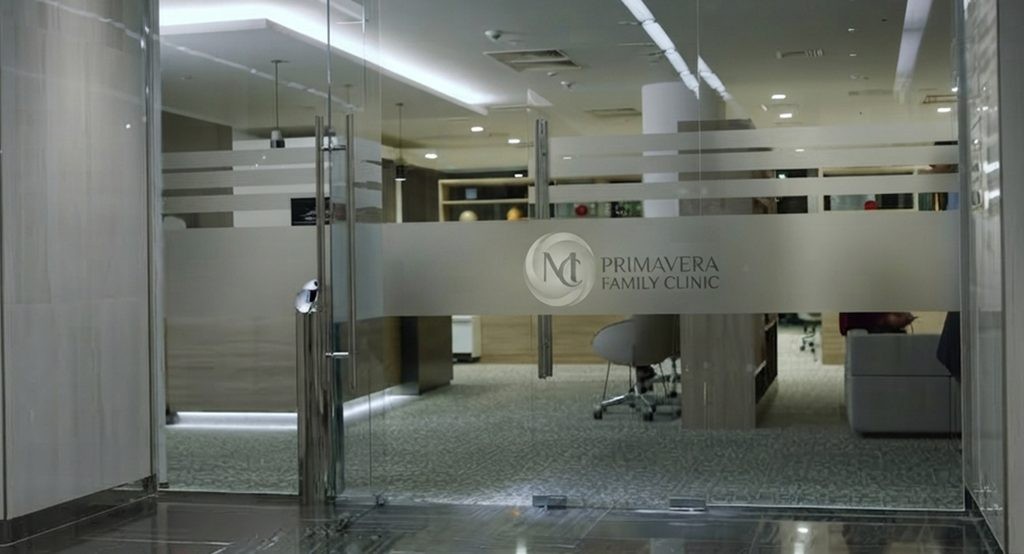
Not every design will give you what you're looking for - it's worth keeping in mind. Patterns that have too many fine lines or visual noise can work against you - those small marks and little gaps eat away at the frosted effect, and your privacy coverage ends up weaker. A cleaner design usually comes out ahead on both fronts - it tends to look more polished, and it does a much better job of keeping whatever's inside out of view. Your existing branding is a place to start - your logo or brand colors can point you in the right direction without much guessing.
Custom frosted film has become affordable over the past few years. Most film products can be cut and printed to match your exact branding (logos, colors and whatever fits your space) at a fraction of the cost of custom glass or a full renovation. Once you've decided on film as the right fit for your budget, a personalized design ends up being one of the easier decisions that you'll make in the whole process. And since most suppliers give you proofs before anything gets installed, you can see what it will look like ahead of time.
Work with a Certified Film Installer
The right installer matters just as much as the right film - and in some ways it's the harder part of the whole process to get right. A great place to start is with contractors who are certified by some of the big names like 3M, LLumar or Solar Gard. These businesses back their products with strong warranty programs. That alone tells you quite a bit about the quality of work that you can realistically expect.
It also pays to ask about their experience with these medical spaces in particular. Privacy film in a doctor's office is a very different job from tinting a retail storefront or an office lobby window - the context matters quite a bit. A contractor who understands patient privacy (what it means, why it matters and how that space gets used throughout the day) will put far more care into the small details than somebody who is there to put film on glass and move on to the next job.
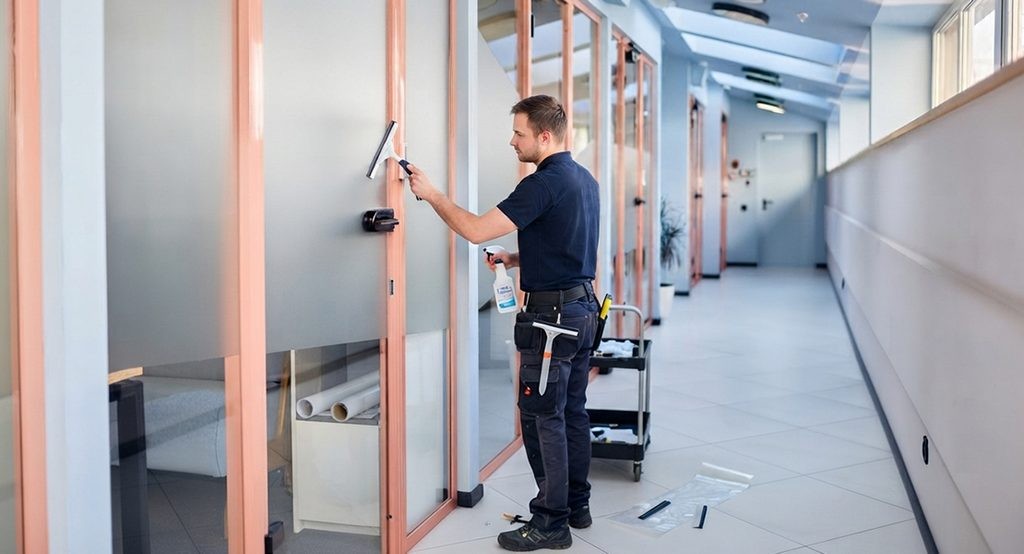
One detail that always comes through is the quality of the finish. Glass in a medical setting gets looked at far more closely than it would almost anywhere else. Patients are right next to it - they rest against it, sit beside it and stare at it for long stretches as they wait. A bubble, a peeling edge or a slightly hazy finish is going to be obvious.
That's the outcome that you're setting yourself up for when price is the only factor driving the choice. A cheaper install might look just fine on day one. But film that starts to lift at the corners or clouds over after a year or two needs to be replaced much sooner - and the cost of going through that whole process again adds up fast. It's one of the more common mistakes I see in this industry.
Do your homework before you hire anyone. Ask to see some photos of their past work in similar spaces and don't make a final call until you feel confident that the person that you're bringing on actually takes the work seriously.
Transform Your View with Professional Tinting
Nothing beats a product that deals with four or five problems at the same time. With the right film on the right windows, a medical practice can protect patient privacy, cut down on the brutal Southern California sun, hold operating costs steady and come out looking quite a bit more put-together - all without a renovation timeline or an uncomfortable budget conversation. Plenty of office managers and practice owners have been putting this off.
Everything leads back to the same conclusion - it's one upgrade where waiting just doesn't make sense. Patient trust is very hard to rebuild once a patient feels their privacy wasn't handled well, and compliance gaps like to surface at the worst possible moments. The sooner patients actually feel the difference, the better - and it tends to matter quite a bit to clinic owners once they start looking into it.
When you're ready to move forward, OC Tint Shop is the team to call. We've worked with medical offices and professional spaces all across Southern California, and after all that experience, we know what it takes to get the little details right (the coverage placement, finish quality, clean edges and the right film matched to the right window) - it's what separates a job that holds up for years from one that eventually has to be redone. Every installer that we send out brings that same level of care to each project, and we're more than happy to come and see your space with you and work out just what makes sense before anything is locked in.
Get in touch to schedule a consultation and see what a well-done installation can do for your practice.