
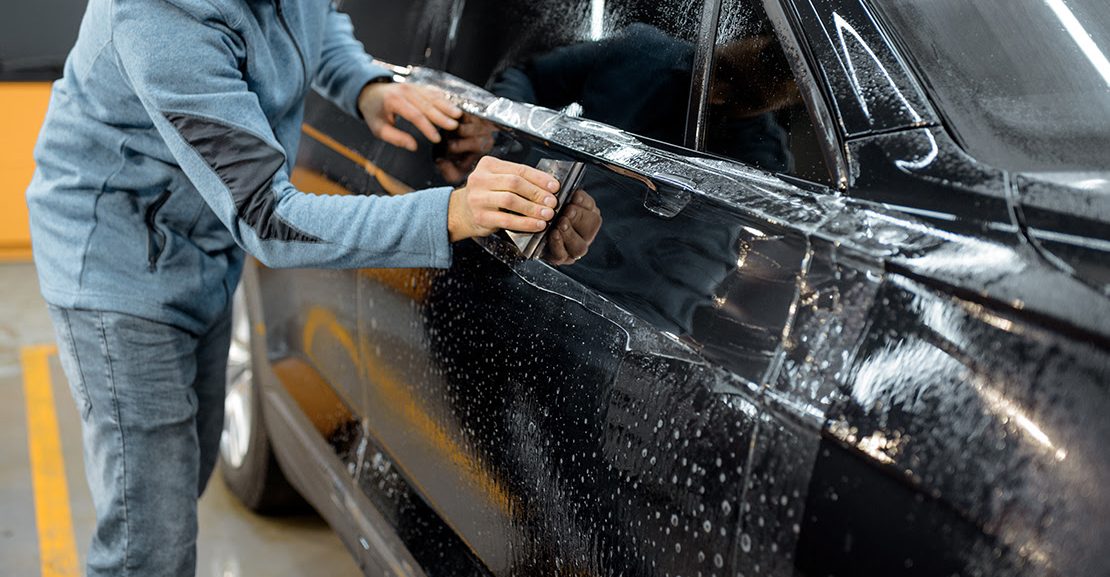
Your car has to deal with a pretty brutal combination of environmental hazards every day when you’re driving in Orange County. Salt spray from the ocean makes its way a few miles inland from Newport and Huntington Beach and settles on just about everything it can reach. UV levels in our area spike above 11 on the index during the summer months quite a bit (and that’s in the “extreme” exposure category). We get more than 3,200 hours of sunshine each year, and that UV slowly eats away at your paint and fades the coat that your car came with from the factory. Beach sand gets everywhere after any coastal drive, and when you’re on the freeway at highway speeds, those small particles act like sandpaper on your paint. Air quality is another big concern – PM2.5 pollution levels in our area run more than three times what the World Health Organization considers safe, and microscopic particles land on your hood and bumpers every day.
A lot of drivers only start looking into paint protection film after they’ve already spotted chips on their hood or seen fading along the roofline, and by that point, the damage is already there, and you’re just protecting what’s left. Some drivers do the opposite and see a deal, then jump on it before they know what makes a quality installation different from one that’ll start peeling at the edges after 6 months of heat, cold and weather exposure. I want to help Orange County car owners make better decisions about paint protection for their vehicles. What you need differs depending on whether you’re mostly on the 405 or taking Laguna Canyon all of the time. This guide will help you skip the most common mistakes and show you what quality work actually looks like – the kind that’ll protect your paint for the next 10 years.
Let’s go over everything you’ll have to know about protecting your vehicle’s paint!
Orange County’s Climate is Hard on Cars
Orange County looks like it should be paradise for car owners, and in a lot of ways, that’s true. The issue is that the environment around here can be pretty tough on your vehicle’s paint over time. Once it gets in there, rust and corrosion are going to start to form way faster than you’d want them to.
Your car doesn’t need a beachfront address in order for the salt to start to damage it. The salty ocean air can drift a few miles inland, so distance alone won’t protect your car. Every time you drive through Newport Beach or park anywhere close to the water, more salt settles onto your car’s paint, undercarriage and the small crevices that are hard to clean.
UV damage is another big factor. Orange County gets beautiful weather almost all year long – and all that sunshine wears down your vehicle’s paint over time. The UV rays will slowly eat away at the protective coat and fade the color beneath it. This whole process happens so slowly over time that most car owners won’t even see how much damage has accumulated until it’s way too late to fix anything about it.
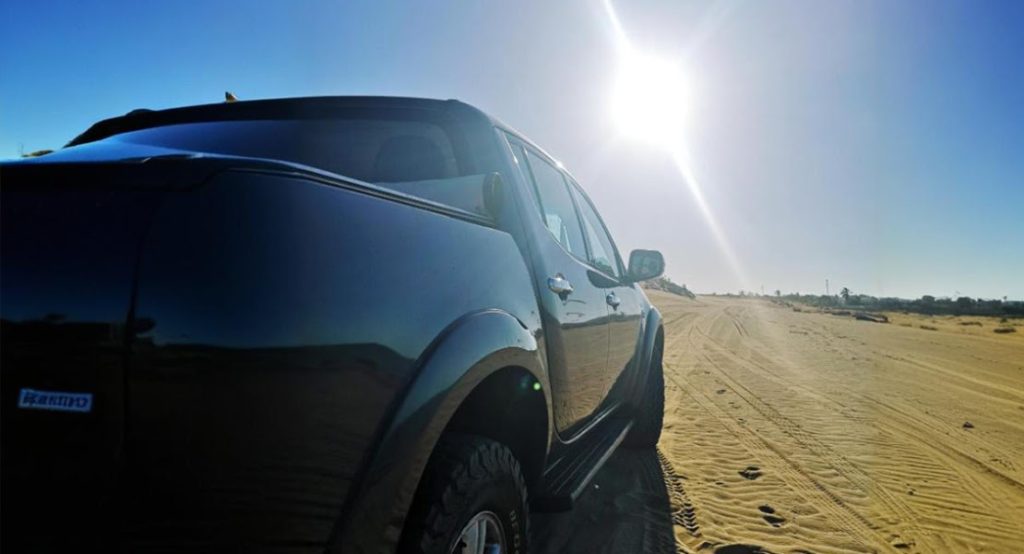
Sand creates its own set of problems for your paint. Weekend trips to Laguna Beach or any other coastal area mean that sand is going to wind up all over your car – it just happens. Later, if you wash your car or wipe it down, those little grains of sand can scratch the paint. No single scratch seems like a big deal on its own. Over time, they add up fast.
Your regular commute plays into this, too. On the 405 or any other busy freeway, your hood and bumper get pelted with road debris day after day. Rock chips are way more common. Every one leaves a vulnerable spot where salt and moisture can start to work their way in.
All these factors work together to break down your car’s paint way faster compared to what vehicles in other parts of the country deal with. Paint protection film is a great choice for Orange County drivers because it acts as a physical barrier between your car’s finish and the harsh conditions that the local environment throws at it day after day.
Types of Paint Protection Films
Paint protection films come in a few different varieties, and the best one for your vehicle depends on how you use it and what protection you’re after. Self-healing film has become very popular over the past few years, and the technology is pretty cool to see in action. When the film picks up minor scratches or light surface marks, it repairs itself once exposed to heat. Just park your car in the sun for 1 or 2 hours, or give it a wash with warm water, and those swirl marks and shallow scratches will start to fade away on their own.
Non-self-healing films are still a great choice if the self-repair feature isn’t a priority. They’ll protect your paint just as well against rock chips and road debris. They just don’t have that heat-activated repair layer. Ceramic-infused film is another solid option worth looking at, and it gives you an extra layer of protection on top of what a standard film does.
The thickness of the film matters quite a bit. Most protective films measure between 6 and 10 mils thick (and just so you know, a mil is 1/1000th of an inch, so these are pretty thin materials). The thicker options in that range will get you much better protection against bigger hits and harsher road debris. The thinner films work just fine for normal everyday driving conditions and minor hazards.
Hydrophobic coatings are another feature that tends to show up all over the product descriptions and marketing materials. What this actually means is that water won’t cling to the surface the way it normally would – it beads right up and rolls off cleanly without spreading out or pooling up. For anyone who washes their own vehicle a lot, this cuts down on the time and the effort it takes to dry everything off afterward, and it also helps you stop those water marks from ever showing up on your paint.
Each manufacturer builds their reputation on something a little different. XPEL made their name with self-healing technology – their film actually responds to the heat and can bounce back from minor scratches and swirl marks over time. 3M took a different strategy and focused heavily on how see-through it is, and their film is about as close to invisible as you can get once it’s on your paint. Either one will serve you well, and a few other quality names are worth checking out, too.
One more thing about matte and satin finishes – they need their own dedicated type of film. Using a standard glossy protection film on them is going to change how your paint looks, and that’s the last outcome you want after paying for that premium finish. Manufacturers make matte films for this situation, and they’ll keep your paint’s unique texture and appearance without adding any gloss or sheen.
Pick the Right Coverage for You
Where you usually drive around Orange County should inform where you apply the paint protection film on your vehicle. Commuters who spend a lot of time on the 5 freeway face debris all of the time, and the front bumper, hood and fenders absorb most of that damage over time. Weekend drives up into the Santa Ana Mountains create different problems – all that brush and loose gravel on narrow, winding roads will chip and scratch your paint much faster than normal street driving.
Partial and full coverage are the two main options you’ll see, and which one of them you should go with depends on your budget and which parts of the car you actually want covered. Partial coverage takes care of the front bumper, the hood and your side mirrors – the areas that get hit the most. For most cars, you’re looking at between $1,500 and $3,000 to get it done. Full coverage wraps your entire car from the front to the back, so every painted surface gets a layer of film over it. Going this way costs more (which makes sense), and you’ll be paying somewhere in the $4,000 to $8,000 range for a wrap.
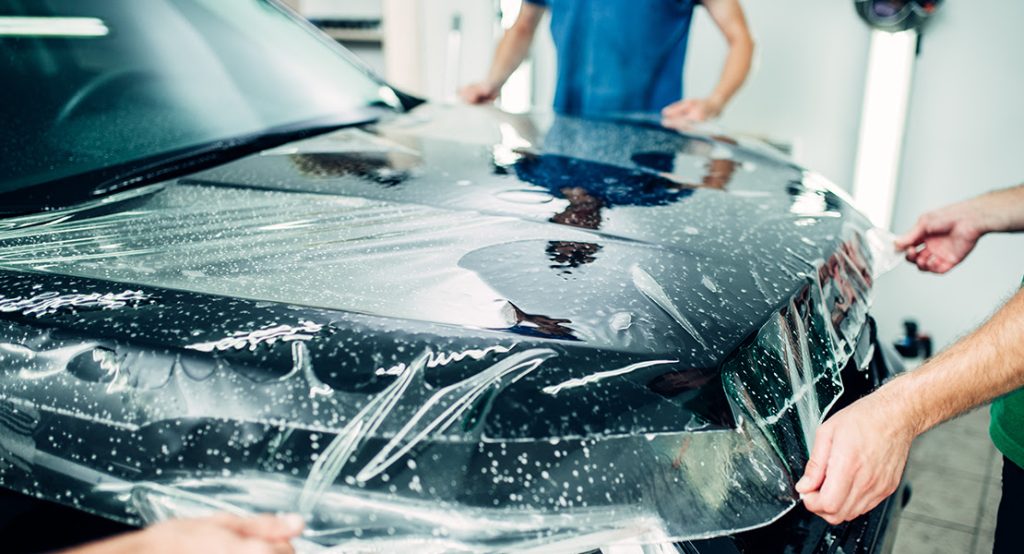
Most customers I work with like to protect the areas that get beaten up the most. The front bumper is usually at the top of that list because it gets pelted with rocks and all kinds of road debris before anything else does. The hood comes in as a close second – when you’re going at highway speeds, it takes a beating the whole time. The side mirrors get hit plenty, too, because they stick out far enough to catch damage from other cars on the road.
A few other areas also commonly sustain damage. The door edges are a perfect example of this – they chip pretty fast when you’re squeezing into tight parking spaces. Your rear wheel arches also take a serious beating from the rocks and road debris that your own tires kick up at them. Door cups (that’s the recessed area where you grab to open the door) also wear down fast from all of the contact.
How a Good Installer Makes the Difference
How well your installer applies the film is going to affect how long it lasts. Make sure to ask if they use computer-cut templates for the installation. Templates are machine-cut to match your exact vehicle, and they give you much cleaner, more professional edges compared to what you get from hand-cutting the film directly on your paint. A skilled installer with templates can make it look like the film came on your car straight from the factory.
Edge wrapping is one technique that sets the pros apart from the amateurs. An installer who knows what they’re doing will wrap the film a little bit around the edges of your body panels instead of just stopping right where the paint ends. It holds the edges locked down tight, and it stops them from peeling up later. Temperature swings here in Orange County don’t help either – edges that weren’t wrapped properly can start to lift within just a few months if your installer decided to cut corners.
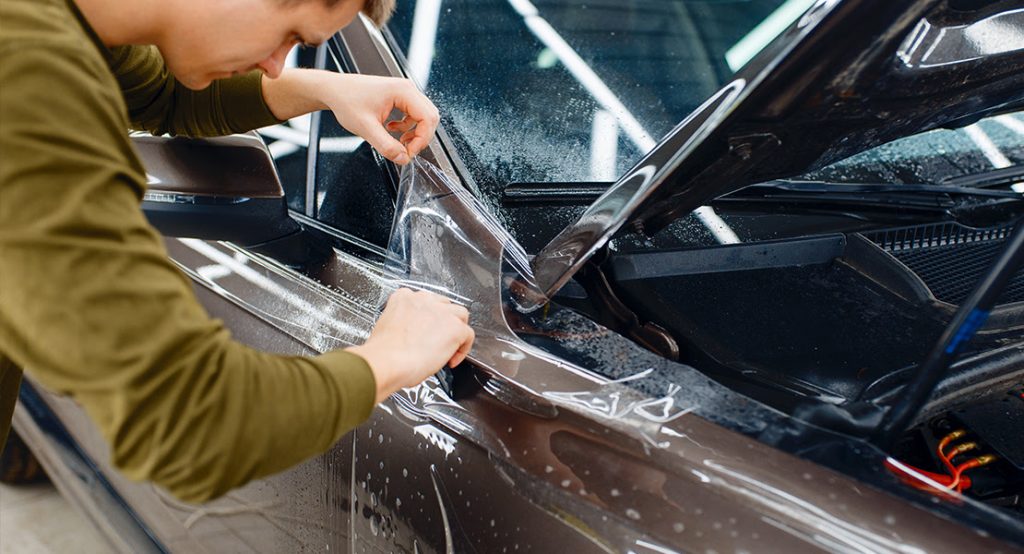
A certification directly from the film manufacturer matters. Companies like XPEL and 3M run official training programs where they teach installers the correct way to take care of their materials. Certified technicians have been through the training on how that brand’s film responds during the installation, and they know which methods will give them the best results with it.
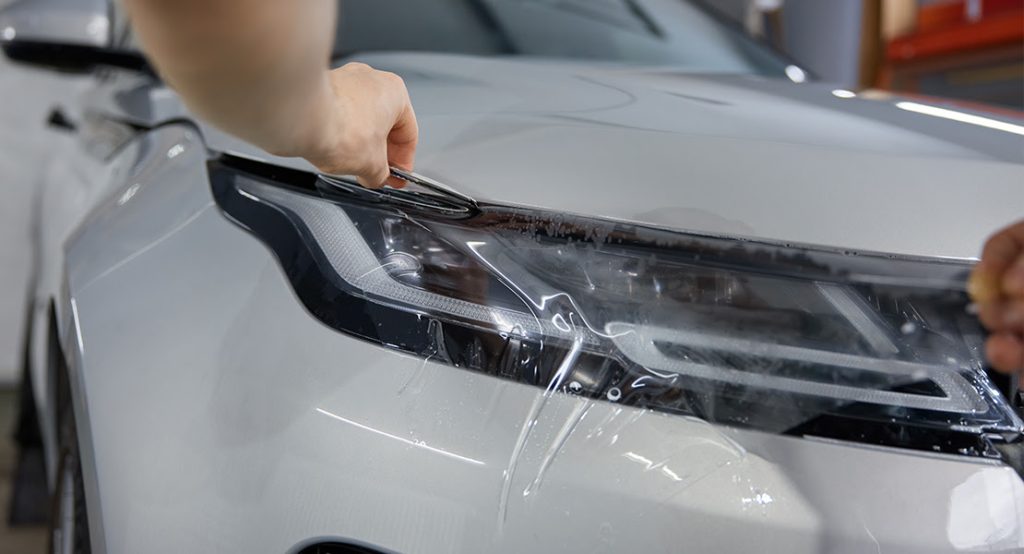
Before booking an appointment with any installer, make sure to ask them about their application method. Some installers like to work with a slip solution, and others like to use gel-based products instead. Either one can work fine if you have an installer who knows what they’re doing. The hardest part of any PPF job is always those tough areas – your headlights, the bumpers and any curved surfaces where the film has to stretch and wrap around just right without any bubbles or lifting. A skilled installer should be able to talk to you about how they take care of these tricky sections.
Don’t rush the process of picking the right shop. The best ones will have staff who really care about the little specifics just as much as you do. A quality shop is always going to go over everything with you, and they’ll never make you feel like you’re a burden for asking questions – even if you have plenty of them.
Care and Warranty for Your Film
Paint protection film usually comes with a warranty included, and most manufacturers will give you coverage that lasts anywhere from 5 to 10 years, depending on which brand you go with. The warranty is there to protect you from manufacturing defects – like yellowing, peeling or cracking that shows up on its own without any external damage as the cause.
Warranties won’t cover damage from rocks, debris or any other road hazards. The film itself takes care of that protection – it’s what the product does day in and day out when something hits your paint. Warranties are there for those rare situations when the film actually fails on its own, and this usually happens because of a defect in the material or an error during the installation.
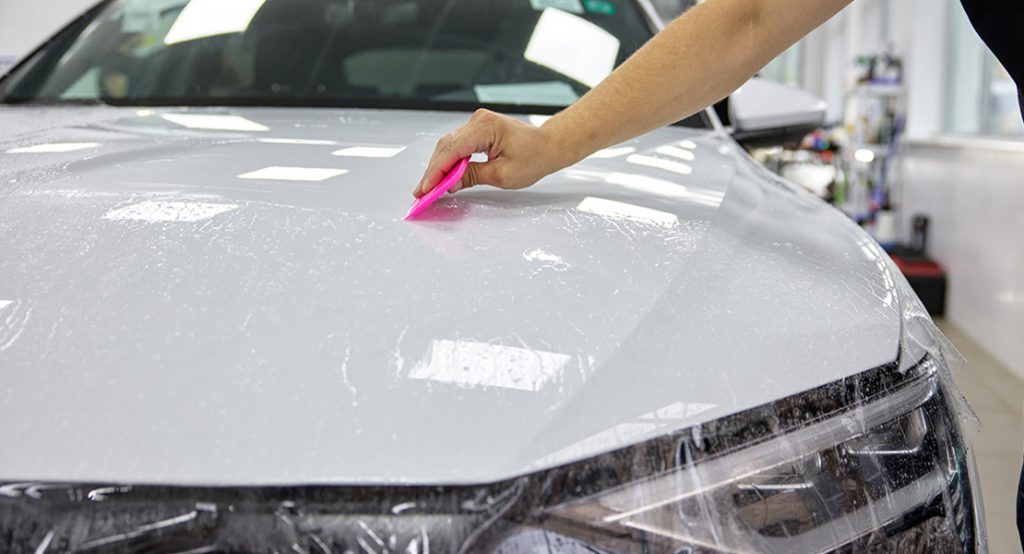
Once the installation is done, there’s a waiting period of about a week before your car can go through any automatic car washes. The film actually needs that full week to cure and build a strong bond with your paint. A hand wash is your best bet during that first week if the car gets dirty.
Once the film has cured completely, you can get back to your normal wash schedule. Just make sure that you use a pH-neutral soap – anything with harsh chemicals will eat away at the protective film way faster than it should. Hard water is something to watch for in Orange County since it leaves behind mineral deposits, and those are actually much harder to get off the film than they would be on bare paint. After every wash, take a few seconds to towel-dry everything off. Water marks can become permanent if you let them sit for too long.
As the film ages, you’ll probably start to see some slight edge lifting or maybe a few minor surface scratches here and there. This wear is normal, and it doesn’t mean that you’ll have to replace the film right away. Yellowing, large cracks or large sections that peel away – those are the signs that it’s probably time for a replacement. Most films will give you a few years of protection before you’ll need to replace them.
Transform Your View with Professional Tinting
Paint protection film is an investment, and it’s not a cheap one. Even so, if you want to preserve your car’s finish and maintain it in great condition for years to come, the cost makes plenty of sense. Orange County’s climate is especially tough on automotive paint. The sun is relentless around here, and it beats down on your vehicle day after day without fail. Add the coastal salt air into the picture if you live or work anywhere near the beach, and your paint is under constant attack from multiple directions. To get the best results from your film, you should learn about the different types that are available, work out which sections of your car actually need coverage based on your driving habits and find an installer who takes their work seriously and won’t rush through the job. These pieces determine how well your investment holds up over time.
A lot of customers will go with the cheapest installer they can find, or they’ll just book whoever can squeeze them in tomorrow. It’s tempting to just get it done and move on with your life. Paint protection film isn’t the place to take shortcuts, though. Give it a few months, and you’ll start to see if you made the right call, and you’ll continue to see reminders of that choice for years to come. Quality film paired with a solid warranty and some care will preserve your car’s finish and hold onto its resale value much better than any rushed, discount install.
OC Tint Shop has been in business for years, and our reputation comes from installations that customers love long after we’re done with the work. We use premium materials exclusively, and we care about each one of the little touches because this film will be protecting your car for years to come. We’d love to show you what we can do for your vehicle. We’ll help you pick out the protection that you’ll love every time you wash your car and see how great that paint still looks!