
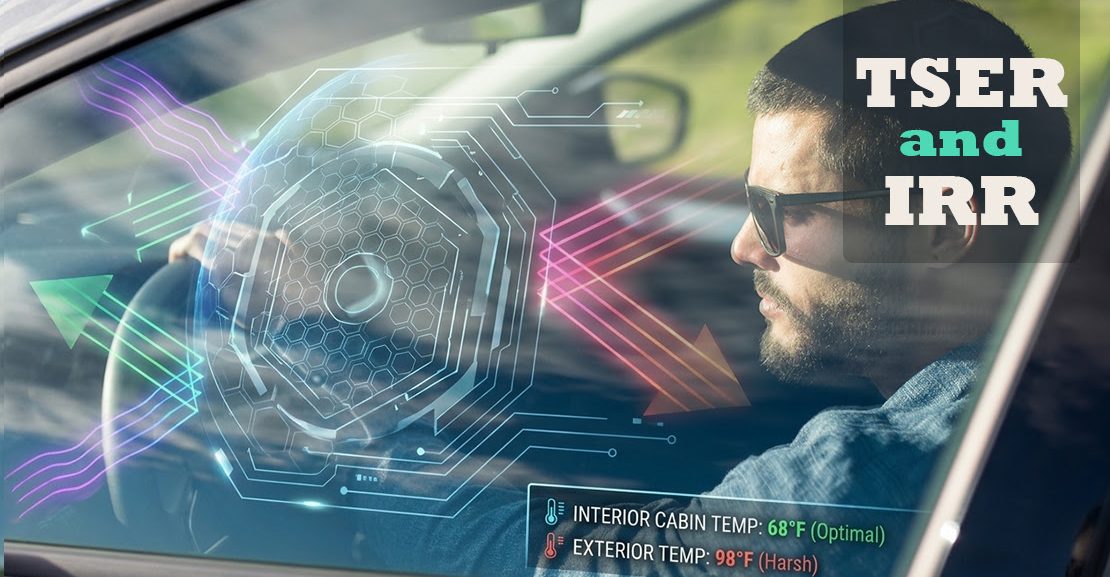
Window tint is supposed to be a pretty easy buy – pick a shade, pay for it and drive off with a cooler car. Plenty of shoppers find themselves on a product page loaded with acronyms and percentages that no one bothered to translate into plain English – it’s where it gets frustrating. TSER, IRR, VLT, IRER – the spec sheets read like an engineering report, and the numbers seem more concerned with making an impression than with giving you a straight answer.
The difference between what’s marketed and what happens in your car is where drivers lose money. A film with a flashy infrared rejection figure on the box can still leave your cabin sweltering – because that one number doesn’t tell you everything. Manufacturers expect buyers to never look past the headline stat, and a fair number of them never do.
The metric that you trust (and the reason that you trust it) is what separates a tint that actually blocks heat from one that just performs well on a spec sheet. It’s not that much to learn. But it matters quite a bit when you’re about to spend a few hundred dollars on an installation that you’ll live with for years.
TSER and IRR are two numbers that sit at the center of every tint evaluation – each one measures something different and each one gets reported differently by brand. Most buyers treat them as interchangeable, and it’s one of the most common and expensive errors I see. Window tint buyers don’t even know that these are two separate metrics. That gap in knowledge is what this rundown covers.
It’s what TSER and IRR mean, so you can choose wisely.
The Real Difference Between TSER and IRR
TSER is a percentage that represents how much of the sun’s total energy a window film blocks – visible light, ultraviolet rays and infrared radiation, all counted together as one single number.
IRR (short for Infrared Rejection Rate) is a more narrowly focused metric that only measures how well a film blocks infrared light – and infrared happens to be the wavelength that’s most directly linked to heat buildup inside a vehicle.
One easy way to remember it – TSER covers everything, and IRR covers only one part of that. A film could have a very high IRR rating and still let a fair amount of UV or visible light energy pass right through – but that IRR number alone would never tell you that.
These two figures are probably the biggest source of mix-up that I see with these products – and it makes total sense why. The two numbers sit right next to each other on spec sheets, and they each get treated as heat-rejection figures. But that number is only telling you part of the story.
TSER gives a fuller picture because it pulls all three types of solar energy into a single rating. If two films are sitting side by side on a spec sheet and you want to know which one will actually leave your car cooler, that’s the number to go by. IRR still matters (infrared is a big contributor to the heat buildup), but on its own, it just leaves too much out.
Why a High IRR Score Can Fool You
The difference between a lower and higher IR rejection number can matter – yet it’s something that most buyers just gloss right over. Manufacturers will test their film’s infrared rejection at just one wavelength instead of across the full range. The infrared range runs from 780 to 2500 nanometers – that’s a fairly wide range to quietly leave out of a test result. When a film only gets measured at a single point on that range, it can post very high numbers on paper. But a large portion of infrared heat still passes right through your windows.
Claims like “99% IR rejection” printed on the box come straight from selective testing – that number is technically accurate. But it’s only for a single wavelength. What that marketing claim won’t tell you is how the film actually holds up on a hot afternoon when the entire range is hitting your glass at once.
That’s also why two films that advertise 95% IRR can seem pretty different once they’re installed. One brand may have tested across the full range, and the other just picked a single convenient data point that made their product look great on paper. Without a universal testing standard to go by, manufacturers can measure it any way they want, so you need more than one number to make a fair comparison between two products.
A much better metric here is TSER, which stands for Total Solar Energy Rejected – it measures how much of the sun’s total energy a film blocks (visible light, infrared and ultraviolet) all rolled into one single score. With everything wrapped into one number like that, it gives you a far more apples-to-apples comparison between products. If I had to point to one number worth watching when you shop for window film, it would be this one.
Why TSER is a Better Measure
Total solar energy rejection (or TSER) is one of the more reliable ways to compare window films side by side. Most measurements only look at one part of what the sun puts out. TSER covers it all – how much of the sun’s total energy a film turns away. Infrared heat, visible light and ultraviolet radiation all get folded into a single number.
When two films have the exact same visible light transmission rating, TSER is the number that tells you which one does a better job of blocking heat. Without it, you’re just guessing.
A darker film will nearly always score higher on TSER than a lighter one. A higher score doesn’t automatically mean it’s better made or more advanced. Darker films block more visible light, and it carries heat energy right along with it, so the numbers climb on their own as the shade gets deeper. The metric gets misleading when you’re comparing across different shade levels. Lining up a very dark film next to a medium-tinted one and judging them purely on TSER would just be measuring shade – not performance.
A better comparison is to line up the films at the same darkness level – that’s where film technology starts to set itself apart. Two films at the same shade level can look identical and still perform at very different levels for heat rejection. TSER at matching VLT levels is the metric that actually tells you which film is doing more of the work.
When a manufacturer or installer quotes TSER numbers but doesn’t mention the VLT, I’d always ask for it – one number without the other just doesn’t give you the full picture.
How Ceramic Tint Wins on Both Fronts
Ceramic films are usually at the top of the pack for TSER and infrared rejection – and what sets them apart is that they get there without a single metallic layer anywhere in the film.
Metallic films bounce heat back before it can pass through your glass – it helps keep your car cooler. But the same reflective properties that do all that work are also going to get in the way of your wireless connectivity. GPS, Bluetooth and your cell reception can all be affected by a metallic tint on your windows. You’ve probably run into this at some point if you’ve ever used an older metallic film on a car with plenty of modern tech in it.
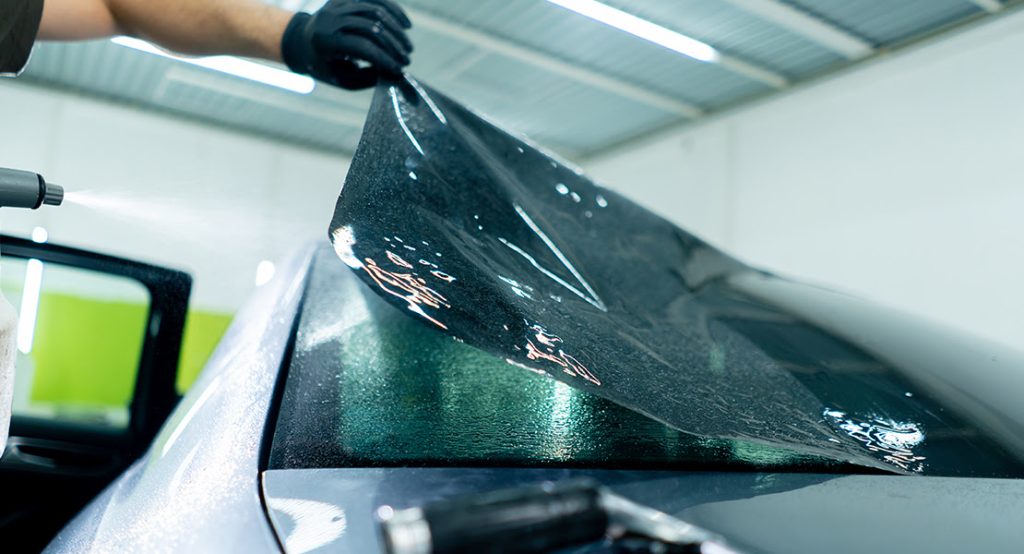
Ceramic films sidestep that trade-off completely. Instead of bouncing infrared energy back, the ceramic particles embedded in the film absorb it and release it as heat from within. What you get is actual heat rejection with zero interference to the electronics that you depend on every day – navigation systems, hands-free calling and wireless CarPlay.
Part of why ceramic films have become the standard benchmark for TSER comparisons is how well they hold up across the full wavelength range. A film can have a decent IRR percentage in a single wavelength range and still come up short across the full solar range. TSER covers a much wider range than IRR alone – it’s right where plenty of otherwise decent films start to fall behind. And the numbers on the box actually match up with the real performance with ceramic, which (in my experience) is not something that you can always count on in this industry.
A Lighter Tint Can Still Block Heat
Drivers figure that darker window tint automatically means a cooler car – darker glass blocks more light and less light means less heat. Visible light and solar energy are two very different factors, and one of them matters a whole lot more than the other for keeping your car comfortable.
The number that actually matters is called TSER, which stands for Total Solar Energy Rejected. A well-made film with a lighter shade and a strong TSER rating will usually reject more heat than a darker film with weaker specs. A tint’s darkness level only tells you how much visible light it blocks – it says nothing about how much solar energy it’s turning away. Those are two very different measurements, and the difference between them is right where most tint decisions go wrong.
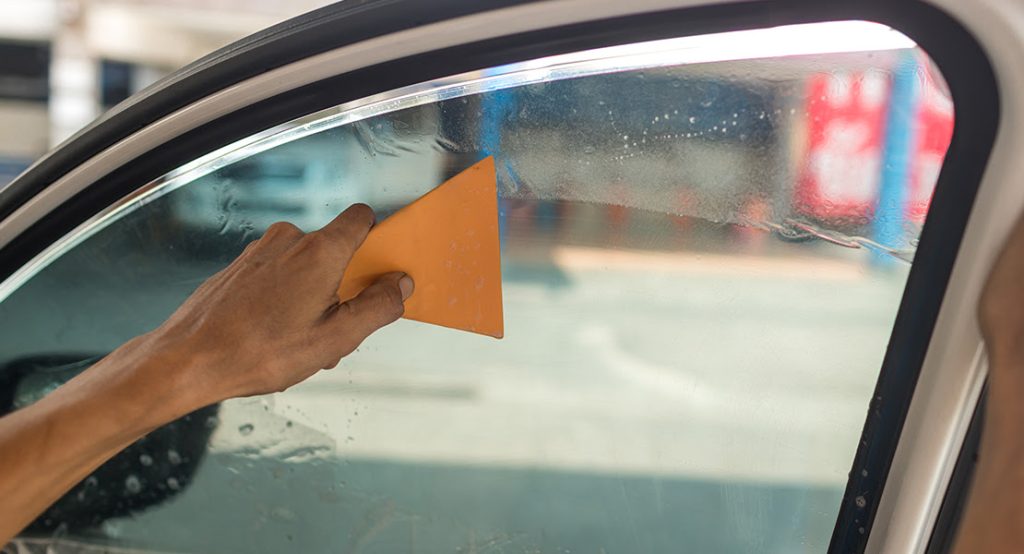
Most drivers are after the same outcome – a tint that brings the interior temperature down without putting them on the wrong side of their state’s visibility laws. That sweet spot exists, and it doesn’t mean that you need to go as dark as your state will let you. A lighter film with quality materials and a strong TSER value can do just that, and it’ll leave you well within legal limits at the same time.
Don’t just default to the darkest shade on the menu without pulling up the spec sheet first. A mid-range shade with a high TSER percentage can outperform a darker film with poor specs in driving conditions – it’s not a minor gap. The shade number is just one part of the picture, and the specs behind the film are what tell the full story. Next time you’re out shopping for tint, make sure to ask for the TSER rating. It’s the one number that matters most on that entire sheet.
How to Read a Tint Spec Sheet
A spec sheet that only covers one or two metrics is worth a second look. A trick that manufacturers pull quite a bit is to report IRR at a single wavelength (say, 900nm) instead of across the full infrared range. A number like that on its own tells you almost nothing about how the film will actually do on a hot day.
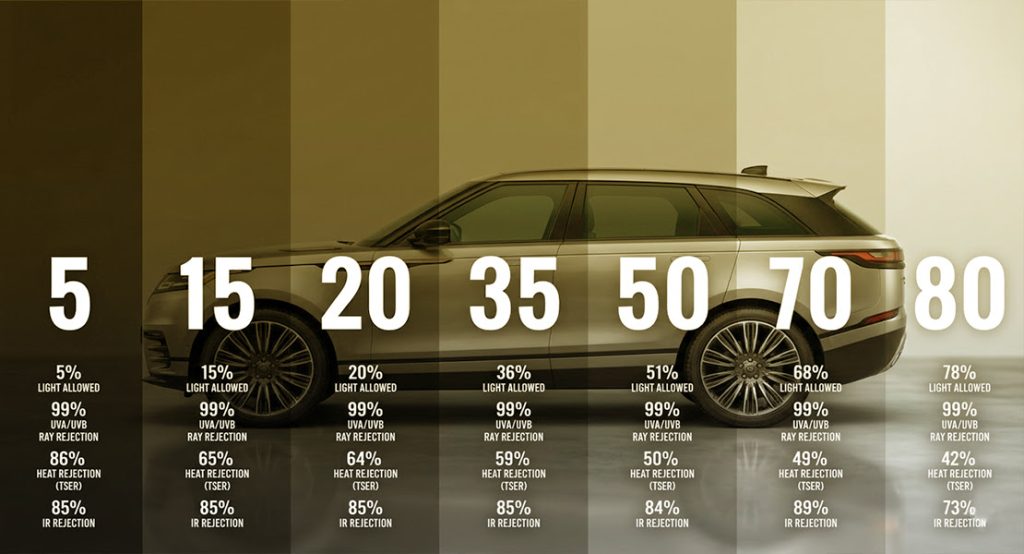
Another detail to watch for is a missing TSER rating. A film can have a strong IRR rating and still let a fair amount of solar energy pass through in other forms – and if TSER isn’t on the spec sheet anywhere, you just can’t get the full picture of what you’re looking at. The two numbers need to be read together, and any spec sheet that only gives you one of them is only telling you half the story – the most common mistake I see when comparing films on their own.
The upside is that with this in mind, you’re in a much better position to ask the right questions before you sign off on anything. Ask your installer to pull up the full spec sheet and to check for all four numbers. If one is missing, ask why. An installer will be happy to talk about the data, and a quality film won’t have anything to hide. A little preparation before that conversation can put you in a far stronger place.
Transform Your View with Professional Tinting
Most customers walk into a tint shop with a shade in mind and not much else to go on. Once you have a feel for what TSER and IRR mean (and how to read the numbers behind them), you’re in a very different position. And it’s a much better place to be when a choice like this comes up.
It’s a small mental adjustment, and yet it does change how you read these numbers. A spec sheet stops looking like a wall of random data and starts telling you something – like how a film will hold up on a hot afternoon in a car. With just those two numbers read, you can separate the films that actually deliver from the ones that only look impressive on a marketing brochure. Plenty of films fall into that second category, by the way.
At OC Tint Shop, genuine and measurable performance is at the core of everything we do. We’ve professionally tinted thousands of vehicles all across Orange County, from Newport Beach to Anaheim, and we treat the spec sheet as a standard on every job. Most shops gloss over this part of the conversation, which leaves their customers with little to no idea what’s on their windows. Our team works exclusively with premium ceramic films, and before anything goes on your glass, we go through the numbers with you so you know what you’re walking away with and why it matters.
Contact us to set up your free consultation and get a better feel for your tint options!