

A traffic stop is stressful enough on its own, and if your windows are tinted, there's a decent chance that you've asked yourself at some point whether that tint is about to make it worse. Most drivers have a vague sense that dark windows can get them a ticket, and yet very few know how an officer decides there's a violation. The whole process is pretty technical, and the line between legal and illegal is narrow.
Even a fairly light tint can still push your final reading below the legal limit, since factory glass almost never starts at a perfect 100%. It's worth keeping that in mind. CHP officers carry small handheld meters that clip right onto the glass and return a reading in a matter of seconds. Those numbers are accurate enough to hold up in court.
Whether you're shopping for tint, already have it on your windows or just got handed a fix-it ticket, it's worth knowing how this works. The law gives officers a hard number to work with, and the meters they use are accurate enough that most of them take the readings at face value. That said, how aggressively any of this gets enforced can still change quite a bit depending on who pulls you over and how their day is going.
None of this gets confusing if you just go through it step by step - no legal background is needed. It's just a look at what actually happens at the window!
Let's talk about how CHP measures your window tint!
What the VLT Number Really Means
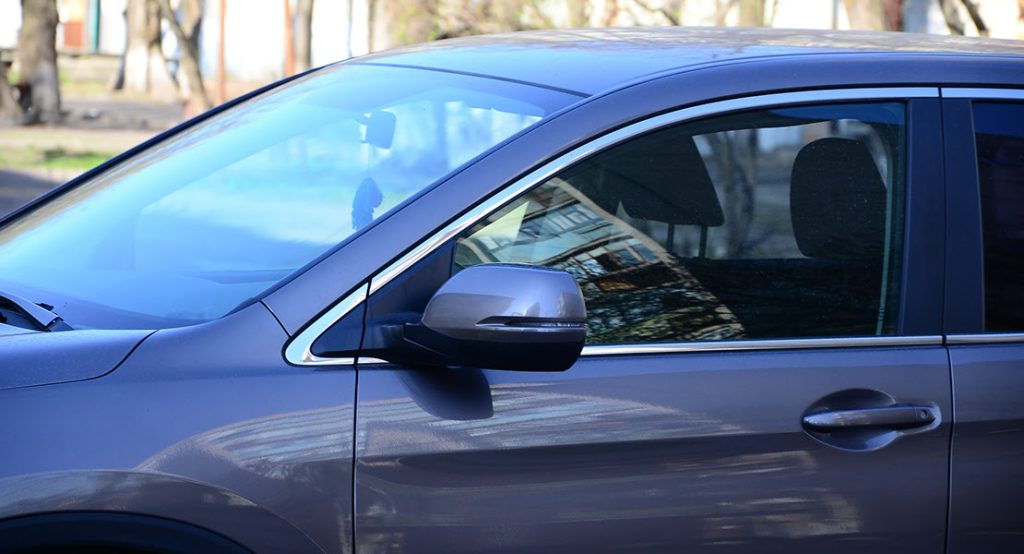
Visible Light Transmission (or VLT) is the percentage of natural outside light that passes through your window glass. Every window tint law in California is written directly around this number, which makes it one of the biggest details to get right before you put any tint on your vehicle. A higher VLT means more light gets through the glass, and a lower VLT means less, which is also why lower numbers correspond with darker-looking windows.
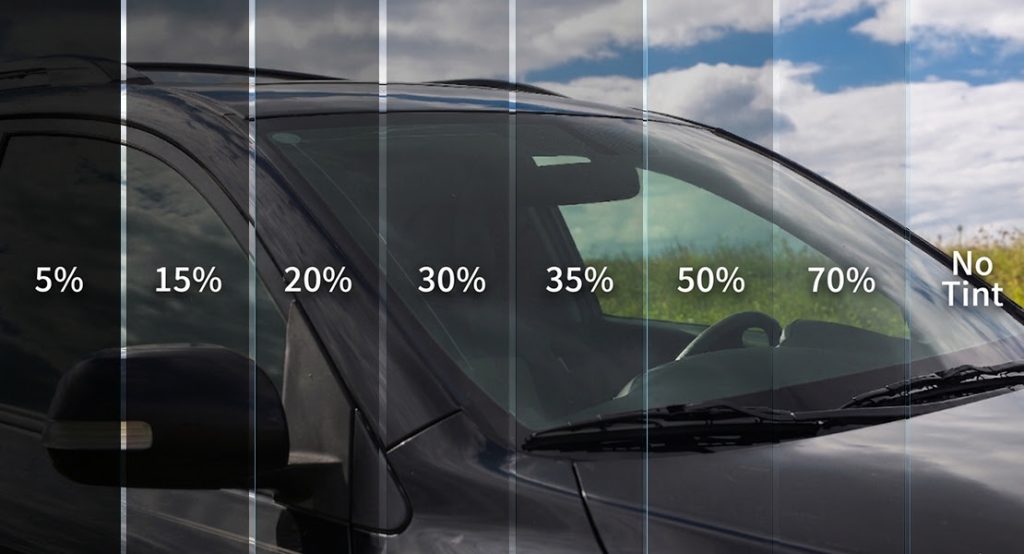
The front side windows in California need a minimum of 70% VLT, which is a pretty strict standard - it means your front windows have to stay fairly light in the shade. For reference, that deep "limo tint" that you see on some vehicles sits around 20% VLT, which means it filters out about 80% of the light that comes through.
Plenty of drivers get this backward the first time. VLT counts the light coming through, so a higher percentage means a lighter window and a lower percentage means a darker one. At 70% VLT, your windows are going to look almost identical to untinted glass - like you haven't tinted them at all.
Once the math clicks, California's tint laws become quite a bit easier to navigate. What the state is asking for is that your front windows stay very close to what factory glass already looks like - that's the exact baseline the CHP pulls from when they bring out a tint meter at a traffic stop.
The 70% limit is the legal floor for front windows and is intentionally set that high. The law doesn't leave drivers with much gray area up front, and a tint meter won't give you any wiggle room either - it reads a precise number, and that's it.
How the Handheld Tint Meter Helps Officers
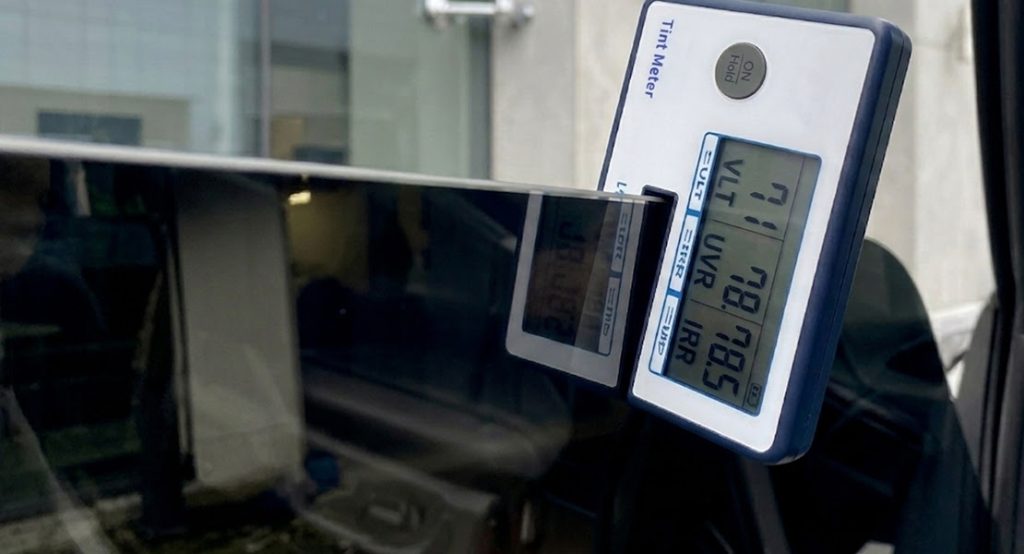
The device officers use to measure your window tint is called a tint meter.
The device clips right onto the edge of your window glass, shoots a beam of light through it and measures how much of that light makes it to the other side - that number is your VLT percentage. The whole process takes about five seconds, maybe even less - and it gives you a dead-accurate reading that's almost impossible to dispute.
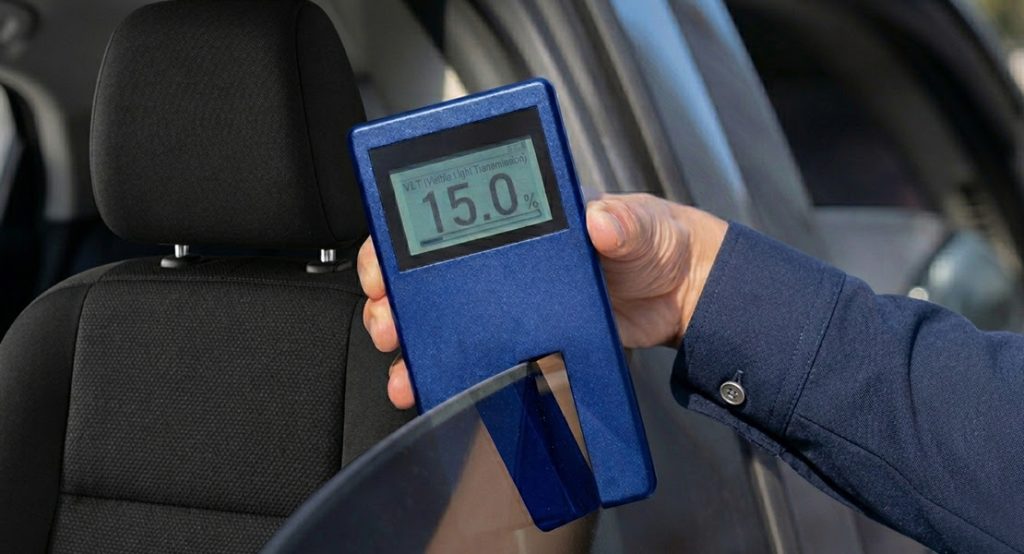
A couple of businesses come up quite a bit in professional circles - Laser Labs and TintMan are probably the two most recognizable names out there, and both of them work on the exact same principle. The devices are compact, handheld and built to give you a reliable reading every time - no estimates, no guessing, just a hard number.
Not every patrol officer actually carries one of these meters in their vehicle. That has an effect on how tint enforcement gets handled on the road. An officer can still pull you over on suspicion of illegal tint. Without a meter on hand, the situation gets handled very differently than it would if the officer could verify your VLT percentage right there during the stop. Some departments store the meters at the station, some officers carry their own, and others don't have access to one at all. That inconsistency is a big part of why tint enforcement tends to feel so unpredictable from one stop to the next - and we'll get into that in a bit more detail a little later.
How Police Really Check Your Window Tint
Window tint stops are pretty uncommon on their own. The more likely scenario is that an officer pulls somebody over for something else altogether (a moving violation, a busted taillight or erratic driving) and the tint just gets checked as a secondary part of the stop.
That secondary check usually comes into play once the officer approaches the window and sees it's too dark. From there, they'll pull out a tint meter for a reading. In some cases, though, a window can be dark enough that the officer will just make a judgment call right then and there without the meter ever needing to come out.
This matters because a driver with borderline tint who's otherwise following every traffic law is far less likely to have their windows tested than somebody who just ran a red light or has a headlight out. In practice, the tint doesn't even come up until an officer already has another reason to be at your window.
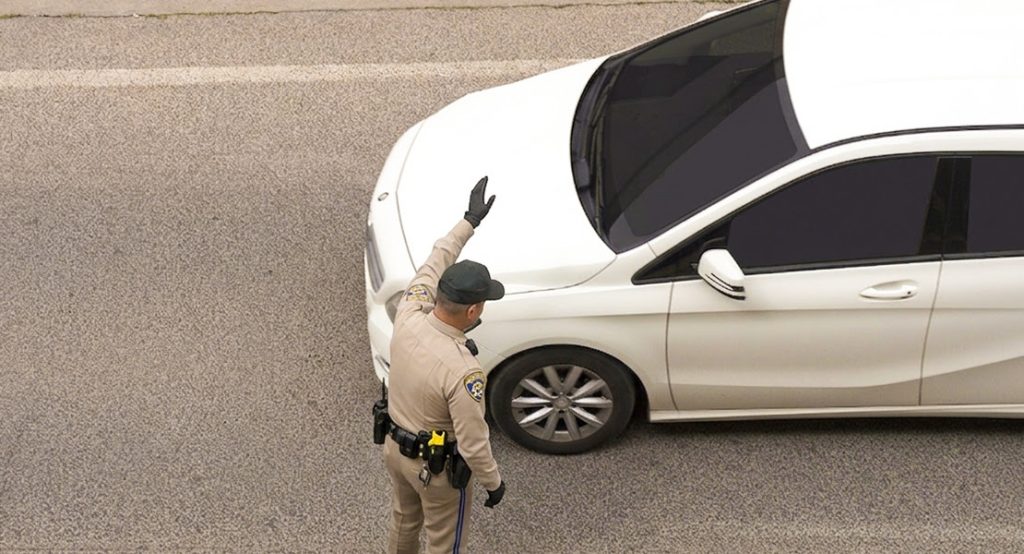
Extremely dark tint can draw a stop all on its own - with no other reason needed. Windows that are dark enough that an officer can't see through from the outside give plenty of justification to pull somebody over - and we're talking about very heavy tint here. Officers do have discretion on this, and from what I've seen, they're not shy about it.
The gray area is where it gets a little more interesting. We're not talking about tint that's dark enough to get you pulled over on sight - more like the tint that's a shade past what the law technically says is legal. For vehicles in that middle zone, a citation is far more likely to come from an unrelated traffic stop than from the tint itself drawing any attention. It's a bit of a strange quirk in how enforcement actually plays out. But it's worth keeping in mind if your tint is anywhere near the legal limit.
Your Factory Glass Already Has a Tint Level
Plenty of drivers run into a hard time with this - even when they've already done their research on the tint laws. Factory glass already blocks a fair amount of light. A fresh-off-the-lot vehicle has glass that blocks roughly 20-25% of visible light on its own, which puts your windows at about 75-80% VLT before a single layer of film has ever been applied.
The main thing about tint meters is that they read your factory glass and your added film together as a single combined number. A car with factory glass at 76% VLT and a film that drops it by another 10% would land you at 66%. California's legal limit for front side windows is 70%, so the combination would put you out of compliance.
That doesn't leave a whole lot of wiggle room for the front windows. Even a film that looks practically invisible can still push you right past the legal limit once the factory glass is already doing part of that job. Before adding any tint to the driver and front passenger windows, do the math - and do it right. The numbers get tight fast, and a tint meter doesn't care how light the film looks to the naked eye - it reads what it reads.
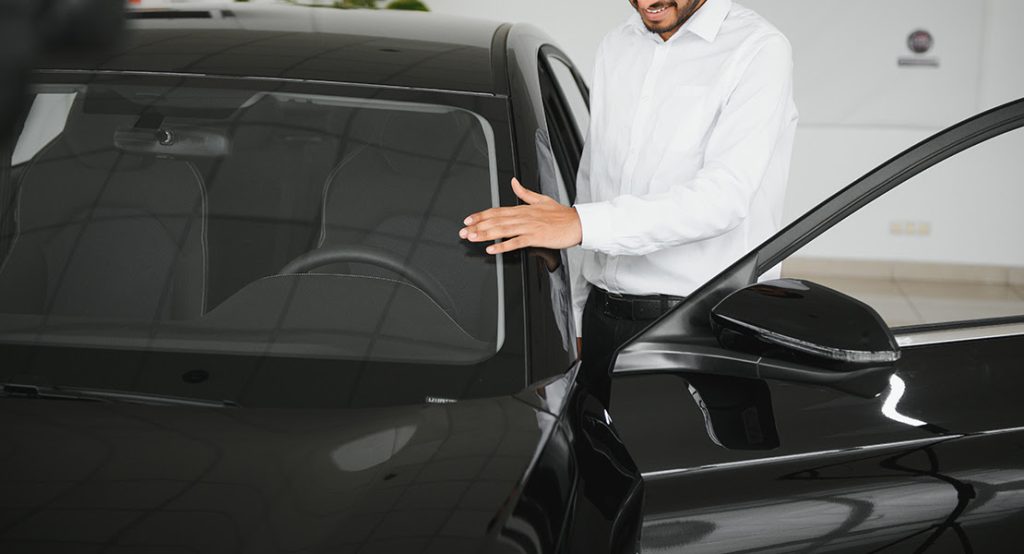
Before anything goes on the car, a decent shop will measure the VLT of your factory glass first - and it does matter. Your factory glass already has a built-in tint level to it, and whatever film gets added will stack directly on top of that existing number. Without a baseline reading, neither you nor the installer actually knows what you're working with - and that means you're just going to choose films and hope they land where you want them.
It also happens to be one of the easiest details to verify ahead of time.
What Can Change a Tint Meter Reading
Tint meters are reliable tools, and for the most part, they do their job well. They are not perfect, though. A handful of common variables can change a reading by a percentage point or two in either direction - and in window tint law, that small a margin can separate a pass from a fail.
The angle at which you hold the device against the glass can change the number a bit. A dirty or smudged window can do the same, and even the outside temperature will have a small effect on what the meter reads. None of these variables are drastic enough to push a 50% reading to 80%, though - we're talking about pretty minor variance here.
The legal margins are just as unforgiving. Front side windows in California have to let in at least 70% of visible light to be street-legal, and the state doesn't budge on that number. A window reading 71% VLT passes. A window reading 69% does not. A two-percentage-point gap is all that separates a legal tint from a citation.
With a margin that tight, a reading that was taken on a cold morning by an officer who held the meter slightly off-center could land very differently than one that was taken under better conditions just an hour later. In my experience, that's why tint-related citations get challenged in court as much as they do - and it's also part of the reason some of them actually hold up. Officers are trained on how to use these devices correctly, and the readings that they generate are usually accurate. Just keep in mind that "usually accurate" and "right every time" are two pretty different statements.
Tint Laws Are Not the Same Everywhere
Enforcement of window tint changes wildly based on where you live. Some places go months without a single tint citation. Others have a reputation for pulling drivers over and handing out fix-it tickets pretty regularly. No single policy exists that tells every officer to manage window tint the same way. That gap in consistency is why this question is so hard to give a straight answer to.
A big part of this has to do with officer discretion. That part is largely out of your hands. One officer might look at your windows and move on. But another might pull out a tint meter and get a reading right there on the side of the road. The law doesn't change from one officer to the next - what does change is how aggressively they enforce it.
That's why drivers can go years with zero issues and then pick up a citation the minute they cross into a different city or county. The tint on their windows didn't change - what changed was who enforced it and what that local department had decided to prioritize.
The gray area around window tint laws is very real, and it deserves a look. Plenty of drivers do go darker than the legal limit and never hear a word about it. That doesn't mean the danger went away - it just means enforcement is unpredictable. Unpredictable is not the same as lenient. That distinction matters.
The shop where you get tint installed will probably give you the same answer that most shops do - your county might not be very strict about it right now, and that's fair enough. A single road trip can put you in a very different situation. You'll still have to bring the car into compliance if you pick up a fix-it ticket in another jurisdiction, and at that point, you're paying to have the tint redone anyway. That cancels out the whole reason that you had it put on.
Can You Fight a Tint Ticket
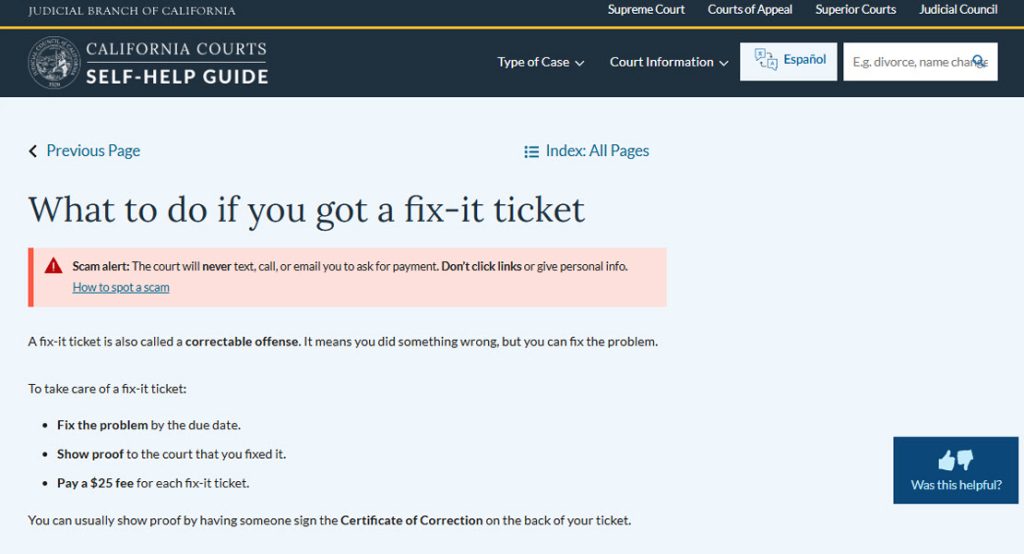
A CHP citation for illegal tint isn't a big deal. What you're going to get in most cases is a fix-it ticket - you pull the tint off, get it verified and signed off by an officer, and then the citation gets dropped. For a traffic violation, that's about as painless as they come.
Drivers do push back. Meter calibration is one of the more credible routes to take. Tint meters need to be well-maintained and tested properly to give accurate readings (and a meter that has drifted out of calibration can return a false result). That's a legitimate point to raise if you want to contest it. It's not a sure win by any means. But it's a well-documented issue that courts do take into account.
Having a sense of that puts you in a much better position to make a well-informed decision if a citation ever comes your way.
None of this needs any legal background to follow - the way that tint measurement works is pretty easy once it's all been laid out. Most drivers who get cited have no idea what the meter is even reading, and in my experience, that gap alone puts them at a disadvantage when it comes time to choose how to respond. A little bit of background knowledge on this goes a long way.
Transform Your View with Professional Tinting
Window tint enforcement has a lot of moving parts. Factory glass already has its own VLT reading, and the tint film can add another layer to that calculation. The meters have to be correctly calibrated, and enforcement standards can vary from one place to the next. All that together is what makes this topic far more involved than just picking a shade that you like.
With that in mind, it pays to have expectations before you walk into a shop. The factory glass issue usually doesn't come up until after the film is already on - and by then, the tint that you chose is sitting right on the edge of the legal limit, which is a pretty frustrating way to learn that lesson. A baseline reading before anything goes on the glass, paired with a tech who actually knows the tint math, matters in how the whole process plays out.
Any shop worth your business should lead with that honesty - no guessing and no second-guessing about what your car can or can't have on it. At OC Tint Shop, we measure your factory glass before we recommend anything, so you already know where you stand before a single strip of film goes on. We've worked with thousands of vehicles all across Orange County, from Newport Beach to Anaheim, and we care just as much about whether you stay street-legal as we do about how your car looks. We'd love to help you get it done right the first time - contact us to schedule your free consultation.